 |
Road Weather Information for Travelers
The Federal Highway Administration (FHWA) Road Weather Management Program (RWMP) recently completed a study titled Human Factors Analysis of Road Weather Advisory and Control Information (Publication No. FHWA-JPO-10-053). The goal of the study was to evaluate the current state of practice in communicating weather-related traffic advisory and control information to the public, and to recommend ways to improve those practices.
The research came up with a set of guidelines for communicating road weather information that meets the needs of drivers and travelers under different weather conditions and travel scenarios.
Background
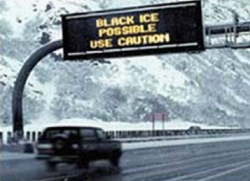
The last decade has seen tremendous growth in both the amount of available weather information, and the methods by which this information can be disseminated to travelers. This growth includes weather gathering devices (sensors, satellites), models and forecasting tools for predicting weather conditions, and electronic devices used by drivers (e.g., Internet, in-vehicle devices, roadway signage).
Improvements in both the type, volume, and quality of road weather information, however, do not automatically lead to better decisions by drivers. Specifically, unless the content, format, and timing of road weather information is consistent with what travelers need, want, and will use, such information may not be useful and – in certain situations – may even lead to reduced mobility, as well as unsafe driving behaviors.
To address this issue, the Federal Highway Administration’s (FHWA) Road Weather Management Program (RWMP) initiated a project to identify traveler requirements for road weather information, review and evaluate the state of the practice in communicating road weather information, and recommend ways to improve those practices.
Current Practices and Research
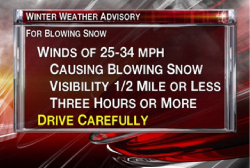
An important aspect of determining traveler requirements for weather information is obtaining detailed information about road weather messages and dissemination methods currently in use and/or documented in literature. The study found the following are the current practices:
Weather Messages: Existing weather advisory and control messages that are used by state transportation agencies and other providers of weather information, include messages on precipitation, visibility, wind, and extreme weather events such as thunderstorms, hurricanes, tornadoes, floods, etc. -
Dissemination Strategies: Messages are posted on the road and disseminated through traveler information systems such as kiosks, websites, in-vehicle navigation systems, dynamic message signs (DMS’s), Highway Advisory Radio (HAR), cellular phones, 511, and other road weather information portals.
Study Recommendations
The study recommendations on the content of weather messages and how that information should be disseminated focused on providing end users with a decision/design tool organized around key driver behaviors and reflective of key weather events.
The general form of the decision/design tool is shown in the figure below. End users work through a short series of questions to identify the weather event and corresponding mobility impacts and traveler decisions that the weather message should support.
Decision/Design Tool
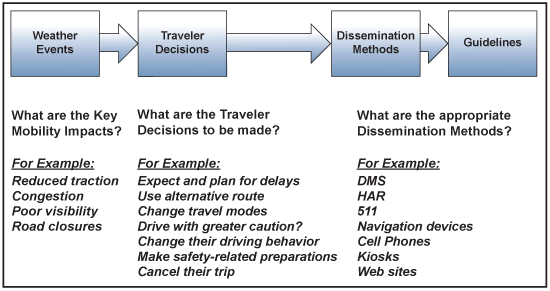
Based on these inputs, the tool provides recommended dissemination methods and guidance on appropriate road weather messages.
Overall, the study produced a number of guidelines to disseminate road weather advisory and control information to travelers in a manner that is understandable, useful, and effective.
Specifically, thirty (30) detailed guidelines for road weather advisory and control information were developed, reflecting relevant literature and best practices for topics, including
the following:
Message content, length, and structure; Design of fonts, colors, icons, and alerts; Display of map, weather, and traffic information; and How to communicate weather event timeframe, urgency, and likelihood.
This approach ensures the information is organized around traveler information needs and driving decisions. Specific guidance is also provided for the range of dissemination methods (DMS, HAR, 511, etc.) associated with road weather information.
Benefits of Improved Information
Improvements in the presentation and timing of road weather advisory and control information for travelers will result in a number of benefits including the following:
Effective and timely dissemination of road weather information by individual transportation agencies and others; Weather messages that are more useful, understandable, accurate, and specific; Informed pre-trip decisions by travelers regarding routes, modes, and departure times; Decisions by travelers that are more likely to reflect actual conditions and lead to safer driving behaviors; and A more consistent approach to the content and delivery of road weather information across cities, states, and regions.
To download a copy of the full report, go to http://ntl.bts.gov/lib/33000/33000/33047/rev_final_hf_analysis_road_weather.pdf.
All photos and graphs in the document are courtesy of the Road Weather Management Program.
Roemer M. Alfelor
202-366-9242
E-mail: roemer.alfelor@dot.gov
Publication #: FHWA-JPO-11-001
previous | next
|
|

