
2. FOT Overview
2.1 Project Introduction
In cooperation with industry, and on behalf of the FHWA, FMCSA sponsored the Hazardous Materials Safety and Security Technology Field Operational Test. The purpose of this project was to test methods for leveraging technology and operations to improve HAZMAT transport security and operational efficiency. The evaluation of this FOT quantified benefits resulting from technology deployments that improve the security and operational efficiency of HAZMAT shipments from origin to destination.
The Evaluation Team examined the degree to which the operational test fulfilled the stated objective of improving HAZMAT transport security and efficiency within discrete HAZMAT shipping scenarios. In addition, the Evaluation Team documented the HAZMAT shipments from origin to destination via a detailed benefit-cost assessment focusing separately on security and operational efficiency. The evaluation process ran parallel to project design and testing with consistent interaction with the Deployment Team to ensure timely bilateral project information exchange.
The FOT test duration was 18 months. The FOT testing period was 6 months for each of the nine motor carrier participants. The nine motor carrier participants had their deployment starts staggered to allow adequate time for proper technology installation, trouble shooting, data collection and technology de-installation. Specific timeframes for project activities are presented in Table 2-1.
| Task Order | Timeframe |
|---|---|
| Task 1: Conducting Risk/Threat Assessment | September to December 2002 |
| Task 2: Develop Concept of Operations | November 2003 to April 2004 |
| Task 3: Develop System Requirements | January to April 2003 |
| Task 4: Develop System Design | February to May 2003 |
| Task 5: Conduct FOT | July 2003 to May 2004 |
| Task 6: Evaluation | September 2002 to September 2004 |
| Task 7: Deployment Team Final Report | June 2004 |
| Task 8: Evaluation Team Final Report | September 2004 |
Within the parameters of the larger HAZMAT FOT, four states (New York, Texas, Illinois, and California) actively participated in the simultaneously conducted Public Sector add-on FOT, along with the accompanying law enforcement and emergency response agencies. These various agencies conducted staged scenario exercises to generate test data and provide enforcement officials' perspectives on security benefits for scenario-specific component and system technology applications. The Public Sector FOT and Evaluation are described in Section 8.
2.2 FOT Technologies
This section details the key functional and technical features for each of the component FOT technologies scheduled for deployment at the individual technology level. Technology descriptions not covered in this section are the various computer systems or servers that enable the core test component technologies to operate or integrate with one another. The following technologies are described:
- Wireless Satellite and Terrestrial Communications Systems
- Digital phone without GPS (not included in actual FOT deployment)
- Panic Buttons
- Global Login
- Biometric Global Login
- Electronic Supply Chain Manifest
- Intelligent On-Board Computers initiating remote vehicle disabling
- Internal Trailer Door Locking system
- External Electronic Seal
- Geofencing
- Tethered Trailer Tracking
- Untethered Trailer Tracking
It should be noted that this evaluation does not endorse any one vendor or another through the results of this evaluation or the functional product descriptions that follow. The evaluation's focus was to explore the functionality represented by the cited product types tested during the FOT. It was necessary for this test to consider individual products to collect quantitative and qualitative test data for the FOT. The specific products used in this FOT should be thought of as being representative for a class of products that exhibit similar functionalities in the field, and not as the only technology products to provide potential benefits in regard to HAZMAT security and operational efficiency.
Satellite/Wireless Terrestrial With GPS Communications Systems
Wireless Communications technologies were deployed for the FOT. This technology is designed to use Satellite-based global positioning system (GPS) technology to provide current vehicle positioning, including latitude and longitude readings. Another Wireless Communication system tested during the FOT was a Terrestrial-based communication link designed to allow two-way communications. Both Satellite and Terrestrial Communications are designed to generated vehicle position with every message. By design, position information for this FOT was generated upon request from the dispatch computer, and position-reporting frequency was configurable at the system user's discretion. Mobile-initiated position-reporting rate is normally configured at 1-hour intervals.
Some FOT participant carriers utilized macros that provide preformatted "fill-in-the-blank" messages, which are more cost-effective than free-form messages, can be updated over the air, and are easily defined by fleet management. All messages are also acknowledged and have a return receipt option.
Digital Phone Without GPS
This technology permits transmission of integrated work order assignment and status messaging between motor carrier dispatch and driver utilizing a Binary Runtime Environment for Wireless (BREW)-enabled digital cellular handset unit. Table 2-1 displays two code division multiple access (CDMA) BREW phones.
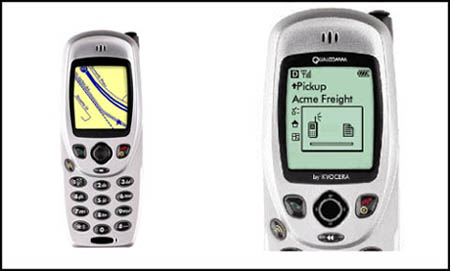
Figure 2-1. CDMA BREW Phones
Software applications allow a carrier the capability to send a driver a load assignment that the driver will accept or reject. Upon load acceptance, the driver is provided with specific details pertaining to the particular load assignment. The software applications enable drivers to send and receive up to five macros pertaining to progress conditions for each load assignment:
- Accept/Reject Load assignment
- Arrived
- Started
- Stopped
- Departed
Panic Buttons
"Panic Button" technology enabled a driver to remotely send an emergency alert notification message either via Satellite or Terrestrial Communications, and/or utilize the remote Panic Button to disable the vehicle. The Panic Button was deployed in two physical configurations, which are displayed in Figure 2-2:
- A Panic Button mounted inside the vehicle to send an emergency alert notification.
- A wireless Panic Button that can be carried by the driver to remotely send an emergency alert and/or use the remote Panic Button to disable the vehicle. The wireless Panic Button is carried by the driver and has a range of 150 feet.
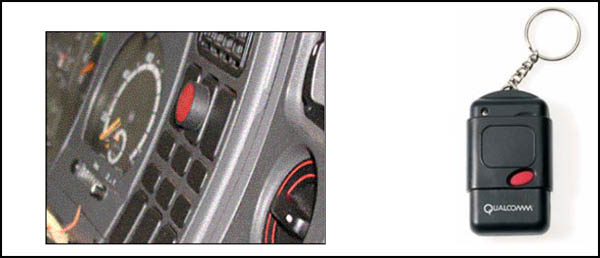
Figure 2-2. Dash-Mounted Panic Button and Wireless Panic Button
Biometric Global Login
Biometric Global Login was accomplished via a biometric verification unit in the motor vehicle as displayed in Figure 2-3. The Biometric system consists of a Central Processing Unit (CPU) and proprietary firmware that managed a smart card reader and fingerprint scanner to execute biometric verification on the driver. By design, the biometric system for this operational test operated with the on-board communications systems.
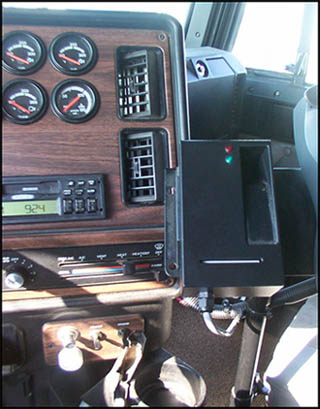
Figure 2-3. Biometric Fingerprint Reader
Global Login
Global Login is an identification technology, which is enabled via the Wireless Communication system maintained by on-board software. A driver entered login information (consisting of a user identifier [ID] and password) into a cab-based interface. The login information was verified within the truck and remotely using the Wireless Communication system. If the Global Login failed, alert notifications were sent to the motor carrier for further action, including vehicle disabling.
Electronic Supply Chain Manifest
The electronic supply chain manifest (ESCM) system was designed to provide positive personnel (chain of custody) identification and load tracking capabilities for the parties involved with cargo shipments. The ESCM system integrated biometric verification, smartcards, Internet applications, and on-board Wireless Communications.
During the FOT, the ESCM system was initiated with a shipper biometrically logging onto the system and creating an electronic manifest, as well as identifying the load assignment. Upon completion of the electronic manifest, the shipper transmitted the manifest to a secure central server and logged out. All authorized users were notified via e-mail regarding the manifest submission. The HAZMAT shipment information was then stored and routed through a central database. All authorized users were required to log-on biometrically to gain access to the ESCM at any point in the shipment. Also, encrypted "smart cards" containing vital shipper, cargo, and driver information were used to transfer and validate HAZMAT shipment movement information. Figure 2-4 shows the ESCM visible to FOT participants displaying manifesting information and manifest transfer details.[1]
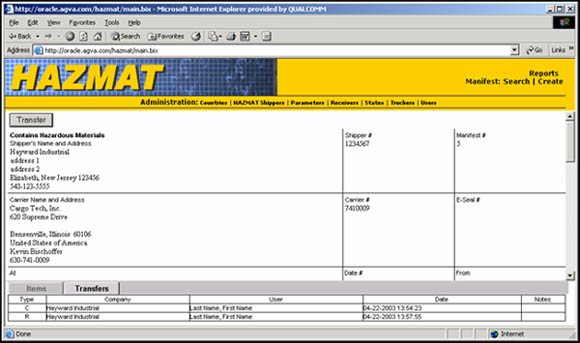
Figure 2-4. ESCM Screen with Manifest Details and Transfer Information
Intelligent On-Board Computers
The On-Board Computer (OBC) was integrated with the Wireless Communications/vehicle operating systems. The OBC permitted the motor vehicle to be disabled in the event of a security breach. These disabling techniques included blocking fuel or sending instructions via the Wireless Communications system directly to the vehicles data bus, which caused loss of throttle power to the motor vehicle. The OBC also was configured to shut down the vehicle whenever there was a loss of satellite signal strength, such as when cables are tampered with or the receiver unit is covered. One variant of the vehicle disabling capability that did not require the use of the OBC was local vehicle disabling. By the driver depressing the panic button of his key fob, a signal was sent directly to the vehicle to initiate the disablement. The wireless panic button with local disabling capability is carried by the driver and has a range of up to 250 feet. This latter application does not require the OBC to perform the local vehicle disablement.
Internal Trailer Door Lock
The internal door locks enabled a dispatcher with the ability to lock and unlock trailer door locks via an over-the-air command. Upon arrival at the consignee's location, the driver sent trailer "door unlock" requests to the dispatcher. The dispatcher then sent an unlock command upon verification of the driver request. Requests to lock and unlock the doors were sent to the dispatcher using the Wireless Communication System. The OBC then facilitates the execution of the lock and unlock events. A specific button installed in the dash of the truck signals the driver as to when the trailer doors can be securely opened.
Once the unlock command has been sent and the driver has pressed the "door open" button, the driver normally had 20 seconds to open the doors before the doors would automatically relock. If the doors relock before the driver is able to open them, the driver contacted the dispatcher to request that the dispatcher resend the door open command.
Figure 2-5 displays the Internal Door Lock installed in the rear door of a motor vehicle trailer in this FOT.
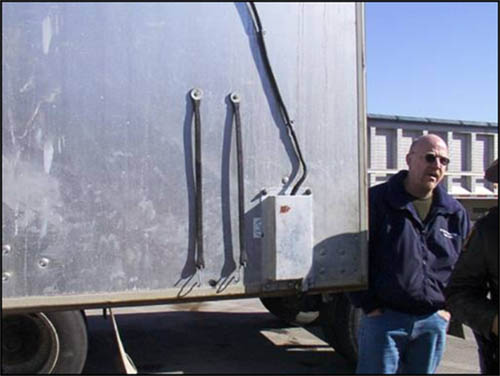
Figure 2-5. Internal Cargo Door Lock
External Electronic Seal
The wireless electronic tag seal (E-seal) system used for this FOT is a Web-based application designed to automatically generate an alert notification when a seal is compromised without proper authorization. The E-seal used short-range Wireless Communications to interface with a mobile E-seal reader in the vehicle. The mobile reader was connected to the on-board Wireless Communications device and the cargo alert notifications were transmitted automatically to the dispatcher. Figure 2-6 displays the E-seal in its distinctive rugged black box.
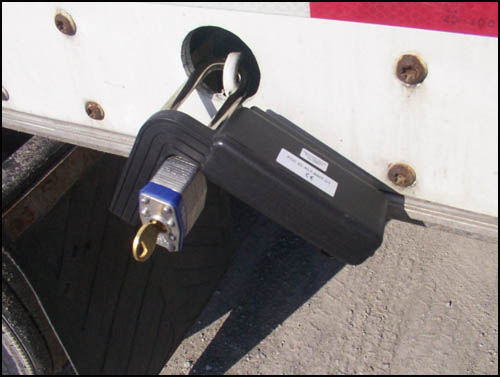
Figure 2-6. Electronic Seal
Geofencing
Internet-based Geofencing and route-monitoring capabilities are designed to allow authorized users to define a risk area or route to monitor. An "electronic fence" can be placed around the route or designated landmark on a displayable Internet-based map. If a driver deviates from a specified route or approaches a risk area, the Geofencing system should notify the dispatcher. If the vehicle enters the risk area, an alert notification should be sent to the carrier's dispatch center. Figure 2-7 displays one of screens that a dispatcher may view when tracking a Geofenced motor vehicle.
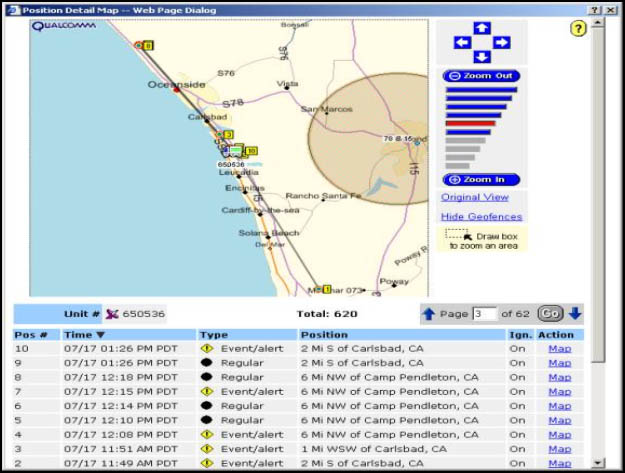
Figure 2-7. Geofencing Dispatch Display Map
Tethered Trailer Tracking
For this FOT, Tethered Trailer Tracking was designed to allow dispatchers to remotely monitor trailer "connect" and "disconnect" events. Tethered Trailer Tracking should allow users to view connect and disconnect events are by the installed mobile unit and transmitted to dispatch across a satellite link with information on the date, time, and connect/disconnect location.
Untethered Trailer Tracking
For this FOT, a proof of concept of this product was used to test Untethered Trailer Tracking capabilities. This tracking system used the core wireless satellite tracking system, including Geofencing capabilities. Merging a tethered and an untethered device documented functionality for an untethered design.
The Untethered Trailer Tracking system is designed to provide real-time trailer identification regarding connect/disconnect time and location, Geofencing, and unscheduled movement. The system used a multimode Terrestrial Wireless Communications technology designed to provide more geographic coverage by eliminating blackouts and "dead" zones.
2.3 System Architecture
The system architecture was designed by the Deployment Team to meet the specified requirements of the FMCSA Operation Test.[2] Figure 2-8 depicts the System Architecture for the FMCSA Operational Test. Specific technical system details can be found in Volume III, Section 2: HAZMAT FOT Technical Performance, Efficiency and Safety Benefits Assessments.
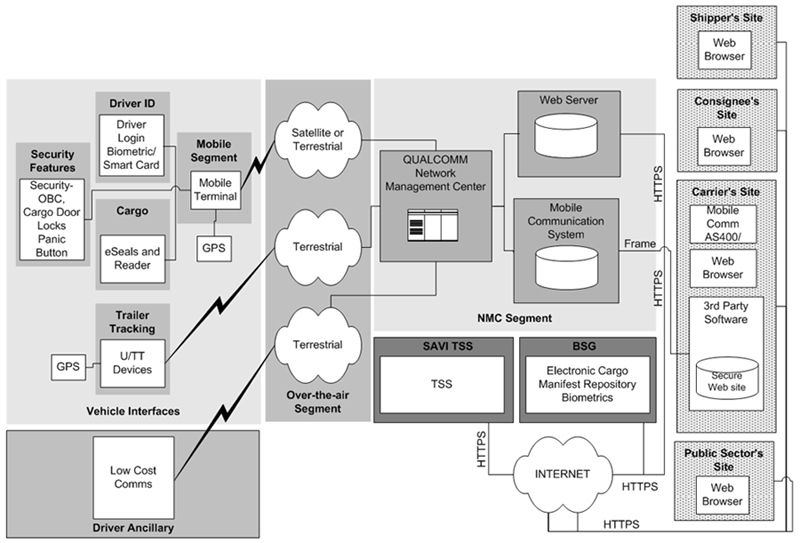
Figure 2-8. HAZMAT Safety and Security FOT System Architecture
2.4 FOT Scenarios
The FOT was separated into four operational scenarios to allow each scenario to address a distinct segment of the HAZMAT transportation market. Each scenario deployed a unique set of technology solutions to account for the specific operational characteristics for a particular sector of the HAZMAT market. The selected technological solutions for each scenario sought to improve security and operational efficiency at several cost levels, depending on the comprehensiveness of the deployed technology set. The four general scenarios for this FOT included:
- Scenario 1: Bulk Fuel Delivery
- Scenario 2: Less Than Truckload High Hazard
- Scenario 3: Bulk Chemical
- Scenario 4: Truckload Explosives
Table 2-2 provides a complete overview display of the multiple scenarios for this test including motor carrier participants, shippers, consignees, Public Sector state agency participants, routes, test technologies, and HAZMAT cargo classifications for each of the FOT designed scenarios. More specifics about each motor carrier participant are provided in Volume III, Section 1: HAZMAT FOT Overview.
The four scenarios were all scrutinized against security risk profiles that categorize and prioritize risk based on the potential tactics terrorists might use, the most likely hazardous materials that could be involved, and by the of the type of shipment – bulk/truckload or less-than-truckload (LTL). The rationale for this risk analysis was to determine potential security gaps that might exist for each scenario.
| Scenario | # Trucks | Shipper | Carrier | Consignee | State Agency | Routes | Technologies | HAZMAT Cargo |
|---|---|---|---|---|---|---|---|---|
| 1a | 13 | Exxon Mobile | Dupre Transport | Exxon Mobile | TxDPS | Texas – 120 mile radius of Dallas, San Antonio, Austin | Satellite Comm., Panic Dash, Global Login | Bulk Fuel Delivery – Class 3 Flammable Liquid |
| 1b | 12 | Exxon Mobile | Cox Petroleum | Exxon Mobile | CHP | California – from Vernon , CA to central and southern CA | Satellite Comm., Panic Dash, WPB | Bulk Fuel Delivery – Class 3 Flammable Liquid |
| 2a | 12 | GE Betz & Hercules | Distribution Technologies |
|
N/A | Macon or Reynolds GA to TN, NC, SC, Fl | Satellite Comm., Panic Dash, Global Login, OBC | LTL-High Hazard:
|
| 2b | 13 | Various | Roadway Express | Various | N/A | Various | Terrestrial Comm. | LTL-High Hazard:
|
| 3a | 12 | Dow Chemical | Transport Services | NuFarm Americas, Inc. | ISP | Midland , MI to Chicago Heights, IL | Satellite Comm., Panic Dash, WPB, Bio. Auth., ESCM | Bulk
|
| 3b | 7 | BP Chemical | Quality Distribution |
|
N/A | Lima OH to IN, MI, PA | Satellite Comm., Panic Dash, WPB, Bio. Auth., ESCM | Bulk
|
| 3c | 6 | BP Chemical | Roeder Cartage | Evans Chemical | NYSP & NYDOT | Lima OH to Waterloo, NY | Satellite Comm., Panic Dash, WPB, Bio. Auth., ESCM | Bulk
|
| 4a | 12 | Orica USA | R&R Trucking | Orica USA | NYSP & NYDOT | Charlestown IN to NY, NJ, & IL
Joplin, MO to TX |
Satellite Comm., Panic Dash, WPB, Bio. Auth., ESCM, OBC, Electronic Seals, Geofencing | Truckload Explosives (Class 1.1-1.6) |
| 4b | 13 | Dyno Nobel | Dyno Transportation | Dyno Nobel | ISP & CHP | Joplin, MO to Pittsfield, IL and Lincoln, CA | Satellite Comm., Panic Dash, WPB, Bio. Auth., ESCM, Untethered/Tethered Trailer Tracking |
Truckload Explosives (Class 1.1-1.6) |
