
I-70 West Integration Project (“Trip-70”)
Local Evaluation Report
(FY01 Earmark)
Colorado Transportation Management System (CTMS)
June 29, 2006
1. Report No. |
2. Government Accession No. |
3. Recipient’s Catalog No. |
||||
4. Title and Subtitle I-70 West Integration Project (FY01 Earmark) |
5. Report DateJune 29, 2006 |
|||||
6. Performing Organization Code |
||||||
7. Authors Frank D. Kinder, P.E., Colorado Department of Transportation |
8. Performing Organization |
|||||
9. Performing Organization Name and Address Colorado Department of Transportation |
10. Work Unit No. (TRAIS) |
|||||
11. Contract or Grant No.SW00-192 |
||||||
12. Sponsorship Agency Name and Address Federal Highway Administration |
13. Report Type and Period Covered Local Evaluation Report |
|||||
14. Sponsoring Agency Code |
||||||
15. Supplementary NotesN/A |
||||||
16. AbstractThe I-70 West Integration Project is the result of an FY01 congressionally designated earmark to support improvements in transportation efficiency, promote safety, increase traffic flow, reduce emissions, improve traveler information dissemination, enhance alternate transportation modes, promote tourism and build on existing Intelligent Transportation Systems (ITS). The project included $595,210 in federal funding and $596,523 in matching state funds, yielding a project value of $1,191,733. With FHWA concurrence, the project was divided into six (6) task orders to address ITS needs of the Colorado Department of Transportation (CDOT) in areas ranging from planning through detailed design and implementation. Specific activities focused on deploying selected field devices to collect vehicle data for the speed map and travel time subsystems of CDOT’s developing central command and control system; and communications equipment, computer hardware and software needed to achieve better communications and data exchange with CDOT’s Hanging Lake Tunnel Control Center and the City & County of Denver. Award of the I-70 West Integration Project funds allowed CDOT to augment previous ITS work and jump-start priority subsystems and was therefore an important building block for Colorado, providing critically needed systems integration activities and device deployment. The project allowed CDOT to increase data exchange capabilities and expand the number, speed, accuracy and reliability of data collection and information dissemination subsystems, yielding a more powerful and utile statewide ITS. Most importantly, the project has provided a significant amount of “behind-the-scenes” work allowing follow-on state and federal projects to be more easily deployed. CDOT believes the I-70 West Integration Project has been a successful venture . Project goals and objectives were met or exceeded. Deficiencies in ITS infrastructure; functionality; automation; traveler information dissemination; CVO; data sharing; and amount, accuracy and timeliness of data were addressed across the six task orders. The project dovetailed well with other ITS activities and initiatives along the same corridor. Most importantly, the project has been an important building block and catalyst leading to greater and more visible advancements in later projects along I-70 to the west of Denver. |
||||||
17. Key Words Intelligent Transportation Systems (ITS) |
18. Distribution StatementNo restrictions. This document is available to the public from: The National Technical Information Service Springfield, Virginia 22161 |
|||||
19. Security Classif. (of this report)Unclassified |
20. Security Classif. (of this page)Unclassified |
21. No. of Pages43 |
22. PriceN/A |
|||
Form DOT F 1700.7 (8-72) Reproduction of completed page authorized
Table of Contents
- 1 Introduction
- 1A Report Organization
- 1B Local Evaluation – Reporting Requirements
- 1C Abbreviations
- 2 Trip-70 Project Background
- 2A Project Management
- 2B Institutional Involvement
- 2C Task Order Breakdown and Work Descriptions
- 2C.1 Task Order 1; Vehicle Probes
- 2C.2 Task Order 2; Web Integration
- 2C.3 Task Order 3; Center-to-Center (C2C) Integration
- 2C.4 Task Order 4; Low Speed Communications
- 2C.5 Task Order 5; DIA Integration Study
- 2C.6 Task Order 6; General ATMS Integration
- 2D Levels and Types of Integration
- 3 Evaluation Plan
- 3A Goals and Objectives
- 3B Hypotheses
- 3C Measures of Effectiveness (MOE)
- 3D Additional Elective Activities
- 4 Evaluation Findings
- 4A Trip-70 Outcome
- 4A.1 Evaluation Category 1 – Data Infrastructure
- 4A.2 Evaluation Category 2 – Data Exchange
- 4A.3 Evaluation Category 3 – Intangibles
- 4B Elective Activity #1 – Institutional Issues
- 4B.1Deployment Team Expertise
- 4B.2 Coordination with Stakeholders
- 4B.3 Agency Partnerships
- 4B.4 Task Order Structure
- 4C Elective Activity #2 – Lessons Learned
- 4C.1 Administrative Items
- 4C.2 Systems Engineering
- Appendix A – Compliance with FHWA Final Rule
- A1 First Condition – Regional Architecture Compliance
- A1.1 CDOT Compliance with First Condition
- A1.2 Colorado Regional Architectures 30
- A2 Second Condition – Systems Engineering Approach
- A2.1 CDOT Compliance with Second Condition
- A2.2 Alternatives Assessment
- A2.3 Risk Management
- A2.4 Regional Architecture Implications
- A2.5 Roles and Responsibilities
- A2.6 Requirements
- A2.7 Procurement
- A2.8 Standards and Testing
- A2.9 Management and Operations (M&O)
- A2.10 Program-Wide Systems Engineering
- A3 Third Condition – Use of Appropriate ITS Standards
- A3.1 CDOT Compliance with Third Condition
- A3.2 Exchange of Video Images
- A3.3 CDOT Standards Plan
- List of Tables
- Table 1 – Abbreviations
- Table 2 – Earmarked ITS Projects in Colorado
- Table 3 – Trip-70 Management Team
- Table 4 – Trip-70 Stakeholders
- Table 5 – Trip-70 Task Order Overview
- Table 6 – Intended Levels of Integration
- Table 7 – Project Goals and Objectives Met By Task Order
- Table A1 – Colorado Regional Architectures; Statewide Core Services and Strategies
- Table A2 – Colorado Regional Architectures; Regional Strategies
- Table A3 – Trip-70 Task Order Traceability to RITSA
- Table A4 – Systems Engineering; Alternatives Analysis
- List of Exhibits
- Exhibit 1 – I-70 corridor, about 8 miles east of the Eisenhower-Johnson Tunnel (EJT)
- Exhibit 2 – I-70 at Morrison Interchange just west of Denver
- Exhibit 3 – Buffalo herd scenic overlook, I-70 foothills west of Denver
- Exhibit 4 – Eastbound I-70 above Georgetown
- Exhibit 5 – Runaway truck, westbound I-70 west of EJT
- Exhibit 6 – Transponder test sampling station; SH-470
- Exhibit 7 – Transponder station cabinet; SH-470
- Exhibit 8 – View from HLT CCTV camera
- Exhibit 9 – Denver International Airport (DIA) Terminal
- Exhibit 10 – I-70 approaching Idaho Springs looking east
- Exhibit 11 – Trucker removing chains Georgetown Hill (CCTV image)
- Exhibit 12 – I-70 Mount Vernon Canyon looking west
- Exhibit 13 – Travel time on SH-470 from TTI operational test (2004)
- Exhibit 14 – East Portal EJT
- Exhibit 15 – Eastbound I-70 descending toward Denver
- Exhibit 16 – I-70 looking east near Fall River Road
- Exhibit A1 – I-70 Denver outskirts looking east
Photo credits :
Colorado Department of Transportation: Exhibits 5, 8, 11, and 16
EnRoute Traffic Systems, Inc.: Exhibits 6, 7, 13, 14
Centennial Engineering, Inc.: Cover and Exhibits 1, 2, 3, 4, 9, 10, 12, 15, A1
Executive Summary
The I-70 West Integration Project – also referred to by CDOT as “Trip-70” – is the result of a FY01 congressionally designated earmark to support improvements in transportation efficiency, promote safety, increase traffic flow, reduce emissions, improve traveler information, enhance alternate transportation modes, promote tourism and build on existing Intelligent Transportation Systems (ITS). The project included $595,210 in federal funding and $596,523 in matching state funds, yielding a total value of $1,191,733.
With Federal Highway Administration (FHWA) concurrence, the project was divided into six (6) task orders to address ITS needs of the Colorado Department of Transportation (CDOT) in areas ranging from planning through detailed design and implementation. Specific activities for the most part focused on deploying selected field devices to collect vehicle data for the speed map and travel time subsystems of CDOT’s developing central command and control system; and communications equipment, computer hardware and software needed to achieve better communications and data exchange with both CDOT’s Hanging Lake Tunnel control center in Region 3, and the City & County of Denver.
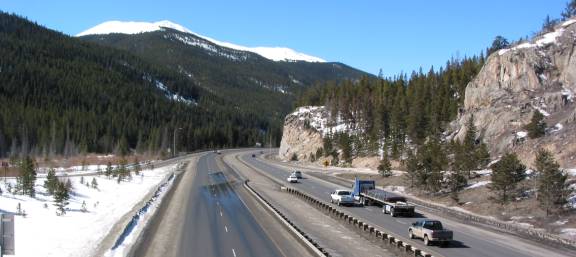
Exhibit 1 – I-70 corridor about 8 miles east of the Eisenhower-Johnson Tunnel (EJT)
Award of the Trip-70 project funds allowed CDOT to augment previous ITS work and jump-start priority subsystems and was therefore an important building block for Colorado, providing critically needed integration activities and device deployment. The project allowed Colorado to increase data exchange capabilities and expand the number, speed, accuracy and reliability of data collection and information dissemination, yielding a more powerful and utile statewide ITS.
Perhaps most importantly, Trip-70 has provided a significant amount of “behind-the scenes” work allowing later State and federal projects to be more easily and effectively deployed. The most significant project achievements are as follows:
- Hardware, software and operating system compatibility was greatly increased between the statewide Colorado Transportation Management Center (CTMC) and other major centers along I-70 – specifically the City & County of Denver and the Hanging Lake Tunnel (HLT) control centers. Of the two, the improvements at HLT were much more substantial and far-reaching under this project.
- Significant corridor communications strides were made. CDOT was able to research, select and deploy a wireless system configuration to replace Cellular Digital Packet Data (CDPD), which was phased out by the Federal Communication Commission (FCC) during this project. This new configuration is presently being used along other Colorado corridors that do not have a fiber optic backbone. CDOT also successfully completed planning and pre-design activities ultimately leading to successful construction of a fiber optic backbone along 60 miles of the corridor under a later earmark.
- CDOT was able to design and develop the field-side and central components of a data collection and analysis system to provide speed mapping and predictive travel times along I-70. Although this work is presently being completed under a separate project, system configuration and field deployment activities were completed as part of Trip-70.
CDOT believes Trip-70 has been a successful venture. Project goals and objectives were met or exceeded. Deficiencies in ITS infrastructure; functionality; automation; traveler information dissemination; data sharing; and amount, accuracy and timeliness of data were addressed across six task orders. The project dovetailed well with other ITS activities and initiatives along the same corridor. Most importantly, the project has been an important building block and catalyst leading to greater and more visible advancements in later projects along I-70 west of Denver.
1 Introduction
In 2000, the US Congress earmarked Fiscal Year 2001 (FY01) funds for selected projects identified to support improvements to transportation efficiency, promote safety, increase traffic flow, reduce emissions, improve traveler information, enhance alternate transportation modes, promote tourism and build on existing Intelligent Transportation Systems (ITS). A proposal submitted by the Colorado Department of Transportation (CDOT) was assessed and found to meet that profile. CDOT was subsequently awarded $595,210 in federal funds for the I-70 West Integration Project (also identified locally and in this report as “Trip-70”). An additional $596,523 in matching state funds yielded a total project value of $1,191,733.
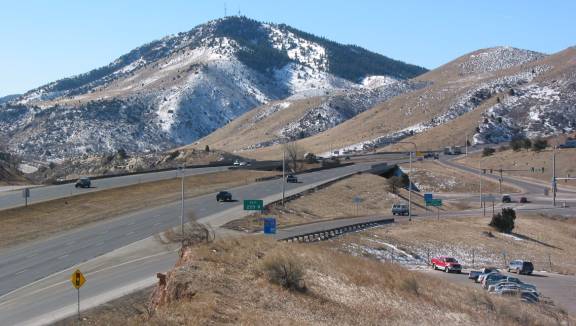
Exhibit 2 – I-70 at Morrison Interchange just west of Denver
Trip-70 project limits cover I-70 from Denver International Airport (DIA) to the Hanging Lake Tunnel (HLT); a distance of about 165 miles. West of Denver, I-70 is rural, passing through a mix of recreational resorts and historical mining towns over predominantly mountainous terrain. The corridor is often victimized by adverse winter weather, which is generally worse and more frequent at higher elevations. Excluding the urban corridor within and adjacent to the Denver area, I-70 is extremely and surprisingly congested in the foothills – especially for weekend traffic along the 50 mile stretch immediately to the west of the city.
Need for ITS improvements on the I-70 mountain corridor west of Denver has been documented over at least ten years in statewide planning and stems from multiple factors including:
- The role of I-70 as a major east-west corridor for the national movement of commerce;
- The role of I-70 as the route of choice connecting mountain recreation and resort destinations with Denver;
- Explosive population and traffic growth statewide over many years;
- CDOT, agency and the public’s ever-increasing need for current, timely traveler and incident information;
- Rural nature of I-70 and its frequent bad weather;
- Recurring congestion and incidents – especially involving trucks and particularly in the winter;
- Limited number and capacity of mountain roadways; and
- Limited resources to provide additional capacity.

Exhibit 3 – Buffalo herd scenic overlook, I-70 foothills west of Denver
These items are currently being addressed by CDOT in a long-term effort to develop a Programmatic Environmental Impact Statement (PEIS) for multi-modal transportation improvements. CDOT is well aware that any relief promised by the recommendations of the PEIS will require billions of dollars and implementation over a 10-year or longer deployment period. In the meantime, congestion along I-70, already a problem, will likely grow much worse without interim attention.
To successfully address some of these difficulties in the immediate term, CDOT recognized it must improve systems operation and management – facilitated by this project as a first step in that direction. CDOT realized an interim approach stressing information sharing and integration was a cost-effective means to help reach desired levels of short-term improvement. To those ends, funding within this project was intended to provide ITS deployment and integration work in the following areas:
- Permanently develop and deploy a previous vehicle probe research activity along I-70;
- Continue to enhance the Co-Trip web-site;
- Plan for and provide additional data sharing between control centers; and
- Deploy field and end hardware to facilitate development of communications systems.
CDOT and its partners along I-70 have a vast amount of transportation, incident, transit and road/weather data available, but had not had a mechanism in place to easily share data; improve the quality of the previous database; or improve the timeliness of the data. At the project outset, the hoped-for outcomes included achieving such improvements through ITS integration.
In the ensuing Partnership Agreement developed by CDOT and the Federal Highway Administration (FHWA), both entities concurred on the work to be included. Project funds were allocated to six (6) task orders comprising a mix of deployment and integration – all with the ultimate goal of improving CDOT and partner agencies abilities to manage transportation along I-70. The six task orders were:
- Task Order 1 – Vehicle Probes;
- Task Order 2 – Web Integration;
- Task Order 3 – Center-to-Center (C2C) Integration;
- Task Order 4 – Low Speed ITS Device Communications;
- Task Order 5 – Denver International Airport (DIA) Integration Study; and
- Task Order 6 – General Advanced Traffic Management System (ATMS) Integration.
A base condition of the Partnership Agreement was that CDOT perform an evaluation of the project. This document addresses that requirement by presenting a summary of the project and its outcomes.
1A Report Organization
Section 1 provides introductory material, including a description of the requirements for inclusion in the local evaluation as defined in the Partnership Agreement and a list of abbreviations. Section 2 includes descriptions of the team, institutional involvement, project task orders and intended levels of integration. Sections 3 and 4 describe the evaluation plan and a summary of findings for the project – including two “elected activities” required by USDOT. Finally, Appendix A describes compliance of Trip-70 with the FHWA Final Rule for projects of this type.
1B Local Evaluation - Reporting Requirements
The CDOT/FHWA Partnership Agreement requires the Local Evaluation Report encompass at a minimum the following discussions:
- Description of the work completed;
- Assessment of how well the project met goals and objectives; and
- The technical and institutional issues encountered completing the project.
ITS project evaluation guidelines prepared by USDOT require two of six additional “elective” evaluation activities be undertaken as part of the local evaluation report. Those are identified and included in this document. The balance of this report describes the overall project and individual task orders, highlights the requested areas and discusses how the elements of the project were or were not deemed successful.
1C Abbreviations
Abbreviations are used throughout this document. Table 1 provides a list of these and their definition.
Abbreviation |
Definition |
AA |
Application Area (for ITS Standards) |
ATIS, ATMS |
Advanced Traveler Information System, Advanced Traffic Management System |
ATR |
Automated Traffic Recorder (Count Station) |
AVI |
Automated Vehicle Identification |
C2C, C2F, C2V/T |
Center-to-Center, Center-to-Field, Center-to-Vehicle/Traveler |
CCTV |
Closed Circuit Television |
CDOT |
Colorado Department of Transportation |
CDMA |
Code Division Multiple Access |
CDPD |
Cellular Digital Packet Data |
Co-Trip |
CDOT Road/Weather/Incident Information web site |
CTMC |
Colorado Transportation Management Center (CDOT statewide facility in Golden) |
CTMS |
Colorado Transportation Management System (“umbrella” of statewide ITS projects) |
CVO |
Commercial Vehicle Operations |
DIA |
Denver International Airport |
DMS |
Dynamic Message Sign |
DRCOG |
Denver Regional Council of Governments (Denver Metropolitan Planning Organization) |
EJT |
Eisenhower-Johnson Tunnel (I-70 at Continental Divide about 50 miles west of Denver) |
FCC |
Federal Communications Commission |
FHWA |
Federal Highway Administration |
FTA |
Federal Transit Administration |
FY |
Fiscal Year |
GPS |
Global Positioning System |
HAR |
Highway Advisory Radio |
HLT |
Hanging Lake Tunnel (I-70 east of Glenwood Springs) |
IMP |
Incident Management Plan (CDOT has IMP for I-70 from Denver to Utah) |
ITS |
Intelligent Transportation Systems |
LER |
Local Evaluation Report |
LMU |
Location Messaging Unit |
M&O |
Management and Operation |
MM |
Mile Marker |
MOE |
Measures of Effectiveness |
MPO |
Metropolitan Planning Organization (DRCOG for Denver Area) |
NITSA |
National ITS Architecture |
NTCIP |
National Transportation Communications for ITS Protocol |
PEIS |
Programmatic Environmental Impact Statement |
RITSA |
Regional ITS Architecture |
RWIS |
Road Weather Information System |
TMC or TOC |
Traffic Management Center or Traffic Operations Center |
TTI |
Travel Time Indicator |
UCD |
University of Colorado at Denver |
USDOT |
United States Department of Transportation |
Section 2 provides more detailed background information through descriptions of the project management configuration, institutional involvement, task order breakdown and work descriptions and levels and types of integration.
2 Trip-70 Project Background
CDOT has concluded or is continuing work on multiple projects using federal ITS discretionary funding and matching state funds – all considered part of the State’s Colorado Transportation Management System (CTMS) Program.
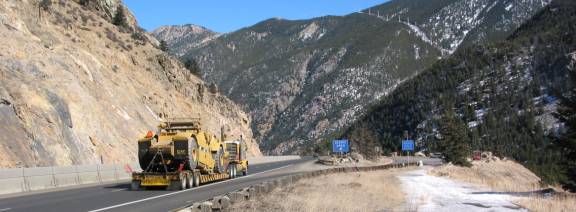
Exhibit 4 – Eastbound I-70 above Georgetown
The first, using an FY98 earmark, was the I-25 Truck Safety Improvements Project, which is complete and encompassed statewide integration, building on ITS systems and architectures previously developed. The second is the I-25 Southeast Corridor and Colorado Transportation Management Center (CTMC) Integration project, which uses FY00 funds to support a $1.6 billion program to reconstruct and add transit improvements to I-25 in Denver. The third and fourth were established with FY01 earmarks – this project plus the CTMC Integration Project. The former is described herein, while the latter provides a new ITS management system for application and integration statewide. The fifth and sixth earmarks were combined into a single project to install a fiber optic backbone communications system and limited ITS infrastructurealong I-70 West; while the seventh installs ramp meters at selected locations on the same corridor. Table 2 lists these projects. Status of the Local Evaluation Report (LER) is included for each.
Table 2 – Earmarked ITS Projects in Colorado
Year |
Name [Status] |
Value |
Primary Work Areas |
FY98 |
I-25 Truck Safety Improvements [Complete; LER 12/2004] |
$11,250,000 |
POE automation; operations; web; ATR; DMS; HAR; integration; communications; speed maps; event management; road/weather; kiosks |
FY00 |
I-25 Southeast Corridor and CTMC [98% complete] |
$3,940,688 |
Agency, transit and public safety integration; low and high-speed communications; road/weather |
FY01 |
I-70 West Integration [Complete; LER attached] |
$1,191,734 |
Speed subsystem; web upgrades and road/weather integration; communications; C2C with EJT/HLT |
FY01 |
CTMC Integration [90% complete] |
$6,760,596 |
New command and control software; equipment upgrades; planning/support for CTMC relocation |
FY03-04 |
I-70 West Corridor Mgmt. I [Complete; LER in progress] |
$9,200,000 |
Fiber installation from Denver to Frisco; POE automation; Beaver Tail Tunnel localized ATMS |
FY05 |
I-70 West Corridor Mgmt. II [2006 build] |
$2,500,000 |
Field deployment including ramp meters at critical locations; travel time sensors in existing gaps |
CTMS Earmark Total* |
$34,843,018 |
* CDOT total ITS program expenditures exceed the totals shown. Additional investment of State and Local Agency funding outside of these earmarked projects does not appear in Table 2.
This project, identified as the I-70 West Integration Project (“Trip-70” to CDOT staff), uses an FY01 earmark to allow acceleration of integration efforts along I-70 west of Denver.
This stretch of I-70 is a priority corridor for CDOT and has been the focus of intensive study over the past ten years. Congestion, primarily due to recreational traffic; and major incidents, frequently involving commercial carriers and usually in the winter; have been the driving forces behind CDOT’s desire to improve I-70 west of Denver. Without funding available to accomplish large-scale improvements, CDOT has been trying to use relatively inexpensive “spot” improvements and ITS applications to help boost existing operations. One of these activities was an Incident Management Plan (IMP) for I-70 from Denver to Utah; completed in late 2000. Many of the recommendations of the IMP require enhanced integration, communications and information sharing. Not only does the IMP recommend better communication between CDOT and outside enforcement and emergency response agencies along I-70, but also between the three existing CDOT control centers on the corridor. The three control centers are:
- The Colorado Transportation Management Center (CTMC) in Golden;
- The Eisenhower-Johnson Tunnel (EJT) control facility near Dillon; and
- The Hanging Lake Tunnel (HLT) control facility in Glenwood Canyon.
The three facilities combine to effectively manage traffic and disseminate traveler information along localized segments of the corridor, but previous data exchange and communication shortfalls between the three hampered an integrated approach to traffic management and traveler information dissemination.
Note that the CTMC was in Lakewood until moving to a new facility in Golden in October, 2005.
Recommendations of the I-70 IMP are being deployed over time as funding allows but will take many years to complete – as well as additional not-yet-programmed funds. Communications between the CDOT centers as well as to agencies along the corridor are being enhanced and improved through the follow-on earmarked projects referenced in Table 2. Full integration between the three CDOT centers and linking the CDOT system to outside agencies was not a planned outcome of Trip-70 due to a combination of limited funding, lack of communications infrastructure and no common software platform between facilities.
Common ITS devices such as closed circuit television (CCTV) cameras and dynamic message signs (DMS) have been among the “spot” improvements deployed over the most recent 5-year period.
2A Project Management
CDOT and its partners formed a team for Trip-70 in similar yet slightly different configuration than that used on previous ITS activities in Colorado. During previous work and in addition to CDOT and participating public agencies; the deployment team included two private sector groups: 1] the systems integrator (“integrator”); and 2] the program/systems manager (“manager”). CDOT made an earlier determination that having access to two private teams provided a workable mechanism for review, feedback, advice and access to resources. The integrator’s role generally encompassed design and construction, procurement, software development and integration. The manager provided technical oversight, completed portions of selected task orders, and otherwise assisted CDOT with the technical, administrative, management, coordination and reporting aspects of the project, including evaluation.
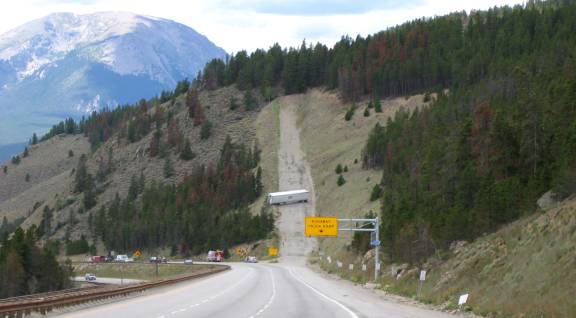
Exhibit 5 – Runaway truck, westbound I-70 west of EJT
Prior to the start of this project, CDOT and the integrator contracted at that time made a mutual decision to discontinue the integrator’s contract. CDOT made the determination for Trip-70 that State forces would fill most of the roles originally intended for the integrator. In addition, the CDOT ITS maintenance contractor – selected under separate State procurement – would assist the team on an as-needed basis with certain field deployment efforts attached to this project. CDOT decided to continue the manager’s contract to provide technical and administrative assistance for the duration of the project. The manager thus developed scopes of work, estimates and schedules for each task order. These were reviewed by a committee comprised of CDOT, FHWA, the maintenance contractor if applicable, manager and affected agencies. Upon approval by the referenced parties, the six individual task orders were activated. Table 3 lists the management team most directly involved with day-to-day Trip-70 activities.
Table 3 – Trip-70 Management Team
Organization & Role |
Name |
Phone |
FHWA; Oversight and Management |
Rick Santos |
720-963-3009 |
CDOT; Program Manager, Project Manager |
Frank Kinder |
303-512-5820 |
CDOT; Task Leader Communications and C2C |
Bob Wycoff* |
n/a |
CDOT; Task Leader Integration Activities and Web |
John Williams |
303-512-5823 |
CDOT; Task Leader CTMC Operations |
Rod Mead |
303-512-5822 |
CDOT; Task Leader Field Device Installation |
Dick Stenger |
303-512-5842 |
Maintenance Contractor; Hardware Procurement; Installation |
Lee Novotny |
303-356-8009 |
Program/Systems Manager; Program Manager |
Steve Sabinash |
303-279-1984 |
*deceased
2B Institutional Involvement
CDOT worked closely with internal and external stakeholders and partners throughout Trip-70. Table 4 lists the stakeholders most directly involved with the project.
Table 4 – Trip-70 Stakeholders
Organization |
Name |
Phone |
CDOT Chief Engineer’s Office |
Peggy Catlin |
303-757-9203 |
CDOT ITS Branch Manager |
John Nelson |
303-521-5838 |
CDOT Region 1 – Traffic & Safety Office |
Ken DePinto |
303-757-9122 |
CDOT Region 3 – Traffic & Safety Office |
Jim Nall |
970-248-7213 |
CDOT Region 6 – Traffic & Safety Office |
Ali Imansepahi |
303-757-9511 |
Colorado State Patrol – Lakewood Office (Dispatch) |
Capt. Chris Meredith |
303-239-4501 |
Denver (City & County) Transportation Division - Operations |
Matt Wager |
720-865-4061 |
Denver (City & County) Police Department |
Ed Connors |
303-640-2011 |
Denver International Airport |
Rick Busch |
303-342-2200 |
Denver Regional Council of Governments |
Steve Rudy |
303-480-6747 |
United States Bureau of Land Management |
John Lancelot |
303-239-3707 |
United States Forest Service |
Kathy Kurtz |
303-275-5379 |
University of Colorado at Denver |
Dr. Sarosh Khan |
(303) 556-2724 |
As applicable, stakeholders were involved in all phases of work related to their jurisdictions or areas of interest. For example, the Center-to-Center (C2C) Integration task order included frequent meetings and coordination between the CDOT management team in Lakewood and the CDOT operations staff at Hanging Lake Tunnel (HLT). Such involvement began during scoping and continued throughout the work. Further discussion of institutional involvement and institutional issues is provided later in this document.
2C Task Order Breakdown and Work Descriptions
CDOT and FHWA began scope negotiation following award. The project was configured to include six (6) task orders as described in the funding application and Partnership Agreement. These are briefly highlighted in Table 5. Project funds allocated to each and a brief work description are included in the Table. More detailed descriptions follow.
Table 5 – Trip-70 Task Order Overview
No. |
Task Order Name |
Value |
Brief Description |
1 |
Vehicle Probes |
$ 307,094 |
Continue previous probe vehicle operational test |
2 |
Web Integration |
$ 114,186 |
Enhance Co-Trip web site |
3 |
Center-to-Center Integration |
$ 200,520 |
Communications end equipment for C2C link to EJT, HLT |
4 |
Low Speed Communications |
$ 349,575 |
Connect field devices to high-speed fiber optic backbone |
5 |
DIA Integration Study |
$ 35,552 |
Intended for study; instead provided C2C end equipment |
6 |
General ATMS Integration |
$ 184,797 |
Umbrella task order to incorporate miscellaneous activities |
TOTAL |
$ 1,191,734 |
As described below, many of the work elements undertaken during Trip-70 overlapped multiple task orders.
2C.1 Task Order 1; Vehicle Probes
The purpose of this task order was to increase the amount of available speed data along I-70 for use as inputs to the speed map and travel time subsystems being developed under the parallel CTMC Integration project. The University of Colorado at Denver (UCD) was CDOT’s partner in this activity, primarily because the task order scope outlined a study, design and implementation to permanently deploy a previous probe vehicle operational test conducted by UCD. Private transit vans traveling between DIA and various mountain resorts were the intended probes. Ultimately, the intent of this task order was met, but not in the way CDOT had expected.
The originally proposed system architecture equipped the referenced vans with a Location Messaging Unit (LMU) device, which served as a combined Global Positioning System (GPS) unit and wireless modem. At predetermined intervals, the LMU was to output a burst transmission to a central server – with segment speed established by a comparison of time and position to that in the previous or following transmission. The anticipated communication media to be used was Cellular Digital Packet Data (CDPD). Due to the relative infrequency of instrumented vehicles – fewer than 100 corridor-wide – the LMU system was to be supplemented by several side-fired radar count stations. These were to be placed at strategic locations to augment the volume data to be used for the speed and travel time applications. The radar stations were also proposed to communicate using CDPD.
Shortly after this design configuration was agreed upon and procurement work was starting, the Federal Communications Commission (FCC) proposed eliminating CDPD in the immediate near future. CDOT immediately placed the task order on hold – a delay that eventually extended to about 18 months – while it researched available options to replace CDPD.
CDOT ultimately replaced CDPD with two communications mechanisms. The wireless aspect of the system was replaced by a Sprint Wireless Code Division Multiple Access (CDMA) network. CDMA is a spread spectrum technology allowing many users to occupy the same time and frequency allocations in a given band or space. CDMA assigns unique codes to each communications unit to differentiate it from others in the same spectrum.
Exhibit 6 – Transponder test sampling station; SH-470
In addition, the FY03/FY04 earmark project was awarded during this period – allowing CDOT to begin design and construction of a fiber optic backbone communications line between Denver and Frisco.
 During the same delay and under a separate project, CDOT was investigating feasibility of deploying High Occupancy Toll (“HOT”) lanes in the Denver area. As an offshoot of this investigation, CDOT began to entertain the idea of using toll tags (transponders) as a potential replacement for the LMU concept. The presence of two relatively new toll roads in the Denver area meant a fairly substantial transponder “population” was present statewide and was continuing to increase over time. Potential advantages of switching to transponders were: 1] the technology was more proven and dependable in the transportation environment than was the LMU; and 2] a much greater population of vehicles was available, thus increasing the amount of data for the speed and travel time applications by several orders of magnitude.
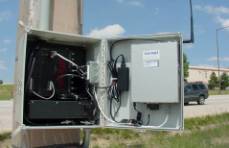
Exhibit 7 – Transponder station cabinet; SH-470
CDOT determined that a test of the transponder application would be beneficial and deployed two such sampling stations – identified as Travel Time Indicators (TTI) – along SH-470 in the Denver area to evaluate potential system viability. Following a successful test, CDOT made the determination that the transponder option was a more cost-effective and less risky long-term proposition.
A combination of TTI and the side-fire radar stations was eventually deployed. For the most part, those installations east of Frisco were placed on the fiber optic backbone – with those locations to the west being placed on the wireless network. The transponders function in “stealth” mode when being used for the CDOT database. This is so the transponder does not issue an audible “beep” that would indicate to the driver that he/she is being assessed a toll.
Thus, the intent of the task order was met and speed data is being received; although the means and methodology to achieve this result were changed in mid-course. Work was completed by CDOT with assistance from the ITS maintenance contractor and UCD. Task order value was $307,094. Approximately 40% of the task order budget was expended when the changeover to the AVI concept was started. CDOT completed the instrumentation of the corridor in excess of the task order value using State funds.
2C.2 Task Order 2; Web Integration
As part of the FY98 project, CDOT first established its highway information website named “Co-Trip” and also began development efforts to bring all weather station data statewide to a server located at the CTMC. In this task order, CDOT enhanced the quality and amount of information available on Co-Trip specific to Trip-70 by incorporating additional mountain weather stations and Automated Traffic Recorders (ATR) along I-70 into the database including selected locations in the vicinity of HLT.
In addition, and in combination with Task Order 3, CDOT was able to incorporate the west slope DMS signs (in Regions 3 and 5) and display these on Co-Trip. All work was completed by CDOT. Task Order value was $114,186.
2C.3 Task Order 3; Center-to-Center (C2C) Integration
The majority of this task order and the next purchased communications end equipment and various video and DMS system items needed to improve data exchange capabilities between the CTMC and the HLT control facility on I-70 about 140 miles west of Denver. A secondary activity also worked to establish a similar C2C link with the Denver Traffic Operations Division. Related work items therefore included the following activities:
- A router was deployed at HLT with the DMS application also moved to that location. This work allowed Co-Trip to immediately update the web display for the DMS controlled by HLT – a function missing prior to this project.
 The project installed a video matrix switcher at HLT along with the appropriate software to allow easier exchange of video data with the CTMC.
- The project provided fiber optic splices needed to establish a fiber optic connection from the CTMC to the Denver Traffic operations facility in east Denver.
- The project began implementing additional splices needed to establish a C2C connection with DIA, however, it is estimated that three or four additional splices and end equipment will be needed at DIA prior to final connection.
Note that the EJT control facility was directly linked to the CTMC via fiber as part of the 2003-04 earmark projects.
All work was completed by CDOT forces and various portions of this work were augmented with State funds. Task order value was $200,520.
2C.4 Task Order 4; Low Speed Communications
This task order was intended to install low speed communication links between field devices and existing, planned or future data concentration points on I-70 – with the intent to facilitate parallel installation of the high-speed OC-48 fiber backbone being undertaken with FY2003-04 earmarks. Ultimately, the majority of the task order funds were expended specifically to address local and C2C communications for HLT. Specific activities included the following:
- A nearby forest fire had damaged microwave communication capabilities of HLT and its ability to communicate with CDOT facilities along the Front Range. Project funds were used to repair this link including a key communications tower.
- The referenced tower repairs also allowed HLT to establish a redundant T-1 communications link (in addition to the microwave connection) with CDOT Headquarters. All communications between the CTMC and HLT are currently routed through the CDOT-owned network via the Headquarters building in south Denver – until such time as the fiber optic backbone can be extended from Frisco to HLT.
- In a joint effort with CDOT Region 3, the project also purchased and installed about 13 miles of fiber optic cable for installation through Glenwood Canyon. This is a 36-strand cable with 12-strands dedicated to the CDOT ITS Branch for statewide applications. The ITS Branch was responsible for pulling the cable. Hardware to support the installation (splice equipment, connectors, tools, etc.) was purchased from CDOT’s shared resources partner – who was in bankruptcy at the time. The fiber line also linked the HLT with the Glenwood Springs residency offices at the base of the canyon.
Work included developing a local Glenwood Canyon communications architecture and deployment plan and furnishing, installing and testing pieces of the network. All work was completed by CDOT forces. Task order value was $349,575, although this total was augmented by State funds.
2C.5 Task Order 5; DIA Integration Study
The original purpose of this task order was to study the possibilities, likelihoods and logistics of setting up a C2C interface between the CTMC and DIA. Ultimately, CDOT discovered the City & County of Denver had already studied these issues and was in possession of a deployment plan. In lieu of repeating a similar study, the task order funds were instead devoted to supporting this effort by installing communications end hardware to establish the initial link between the CTMC and Denver Traffic Operations. As described above, fiber splices were provided under Task Order 3 to help establish this link; and to begin working geographically towards DIA for future establishment of that connection. It is estimated three or four major splices remain within the Denver-owned cable network to establish the communications segment between Denver Traffic Operations and DIA – the missing piece ultimately required to link CDOT and DIA.

Exhibit 9 – Denver International Airport (DIA) Terminal
Work was completed by CDOT. Task order value was $35,552.
2C.6 Task Order 6; General ATMS Integration
This task order was used as an umbrella activity to incorporate the purchase, installation and integration of various elements supporting the previous groups. Specific activities included the following:
- The purchase of many of the side-fired radar units supporting the speed and travel time subsystems was completed under this task order. Installation costs of these units were generally provided using State funds.
- CDOT provided the up-front planning and developed the software drivers within its emerging ATMS/ATIS for the migration of I-70 field device communications from telephone to fiber optic connectivity. Specific drivers were written for the side-fired radar units and the transponder sampling stations. The eventual migration to fiber was relatively straightforward once the devices were switched over following deployment of the Denver to Frisco backbone (deployed in the FY03-04 earmark project).
- CDOT developed a programmable modem to facilitate data exchange from the transponder sampling stations to the CTMC. The modem allows for accurate timekeeping and transmission of the data to the CTMC. Both wireless communication via the Sprint wireless network and communications via the fiber optic backbone are supported.
Work was completed by CDOT with assistance from the ITS maintenance contractor. Total task order value was $184,797.
2D Levels and Types of Integration
The I-70 West Integration project yielded a mixture of deployment and integration, with most of the project efforts in the latter category. These integration activities were undertaken on several levels for multiple purposes and in various complexities. Because CDOT did not possess “umbrella” software to encompass all operating systems at the time of this project, most of the effort was devoted to improving selected subsystems and establishing limited data exchange with outside parties.
A summary of the intended levels of integration for the task orders is provided in Table 6.
Table 6 – Intended Levels of Integration
# |
Task Order Name |
Deploy Field Devices |
Communication Infrastructure & Integration |
Enhance
|
Internal Systems Development |
Outside Data Exchange |
1 |
Vehicle Probes |
X |
X |
|||
2 |
Web Integration |
X |
||||
3 |
C2C Integration |
X |
X |
|||
4 |
Low-Speed Communications |
X |
||||
5 |
DIA Integration Study |
X |
X |
|||
6 |
General ATMS Integration |
X |
X |
X |
X |
X |
Section 3 describes the evaluation plan for the project, including goals and objectives, hypotheses, measures of effectiveness, and a description of the additional elective activities.
3 Evaluation Plan
As described in the Local Evaluation Reporting Requirements, the following measures, where applicable, are to be quantitatively assessed as part of this report:
- Reduction of crashes;
- Reduction of fatalities;
- Increased throughput – people and goods;
- Reduction of congestion-related delay;
- Improved customer satisfaction;
- Savings in cost to the public and private sectors; and
- Energy and emissions impacts.
Technical levels of success for ITS projects are difficult to quantify in these categories - particularly for projects like this, which have integration and traveler information components but little physical field deployment. This is because there is no proven algorithm to relate measures such as crash reduction or emissions to ATIS devices such as the Co-Trip web site, or an activity such as C2C data exchange. FHWA continues to collect data toward developing correlations between ITS devices and “hard” measures of effectiveness (MOE), but ongoing work continues in developmental stages. Concrete algorithms to relate MOE to ITS integration remain unavailable. Qualitative measures are easier to identify.
Because the most of the tasks in Trip-70 are related to ITS integration, this project is one that will not directly yield “hard” measures of effectiveness (MOE) in the categories listed. This is because most of the Trip-70 activities are integration-oriented; not easily translating to conventional MOE.
The primary CDOT goal for Trip-70 was twofold: 1] that CDOT address deficiencies in field infrastructure, integration, communications and operating systems and; 2] that the project be perceived as a “success story” to help continue building momentum of the Colorado ITS Program. Considering the subjectivity and other difficulties inherent in evaluating ITS integration projects, and given the desire for a “success story,” CDOT made the determination at an early stage to take an institutional approach to local evaluation. In addition to the technical evaluation – measured by enhanced capabilities – devices (more data), additional functional modules (better data), integration between systems and improved inter-agency data exchange; the evaluation was also directed to investigate managerial and administrative performance. In addition to these items, two additional elective activities are required to be part of the local evaluation. These are discussed in Section 3D.
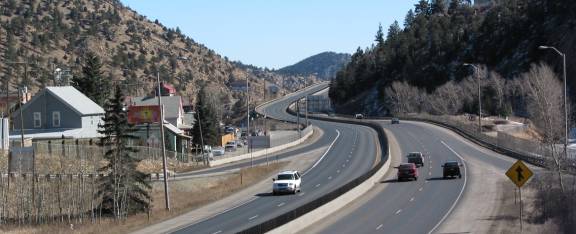
Exhibit 10 – I-70 approaching Idaho Springs looking east
3A Goals and Objectives
In parallel with the I-70 West Integration project, CDOT continued its ongoing strategic planning efforts for the statewide deployment of ITS. As part of that effort, a number of high-level goals have been identified for the Colorado ITS Program. These include the following:
- Improve productivity. Maximize productivity of the transportation system by using ITS to increase throughput of passengers and vehicles – effectively increasing capacity. Use ITS to manage and fine tune system operation in response to demand and in the event of incidents that interrupt normal operations.
- Increase mobility . Provide travel choices and increase efficiency by access to comprehensive, reliable, timely traveler information. Allow travelers to make informed decisions about their trip prior to and during travel. Enable travelers and businesses to efficiently choose mode and route based on real-time data. This spreads volume among modes and over time, reduces costs of doing business and enhances quality of life.
- Increase safety. Enable faster response to incidents and reduce incidents by active management. Secondary benefits are realized from broadcasting alternate routes allowing travelers to avoid incidents and congestion with alternates developed as part of IMP. ITS technologies enhance public safety by monitoring operations, managing traffic affected by special events, and providing travel related weather advisories.
- Enhance inter-modal connectivity and inter-jurisdictional coordination . Promote and support seamless inter-modal transportation connectivity and Colorado ITS systems. Manage information as a resource that will enhance inter-modal connectivity between services of public and private transportation providers.
These program goals have the intent of developing a traveler information and traffic management system that allows integration and interface of existing legacy, as well as future systems, and one in which data is managed as an asset of value to system users and transportation providers of all types. The CDOT role is to provide statewide leadership by deploying enabling infrastructure, developing partnerships, establishing policies and procedures with stakeholders to ensure integration and seamless access to data, and by providing advocacy for those ITS investments that have a strong business case.
Trip-70 supports the fourth program goal, while speaking directly to the others, as well as the overall statement of intent directly above.
Ultimately, Trip-70 was developed with two specific goals in mind:
- Address Colorado ITS infrastructure deficiencies; and
- Create/build an ITS success story in Colorado.
- Automate processes towards minimizing burdens on State staff;
- Provide enhanced functionality;
- Improve the dissemination of traveler information;
- Enhance availability of data for partner agencies;
- Enhance existing corridor incident management capabilities; and
- Improve amount, accuracy and timeliness of data flows into and out of the system.
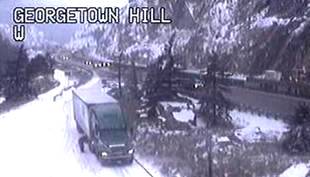
Exhibit 11- Trucker removing chains Georgetown Hill (CCTV image)
3B Hypotheses
Based on the project goals and objectives, CDOT was able to develop hypotheses upon which to build evaluation of the I-70 West Integration project. As might be anticipated, these focus tightly on elements of primary interest to CDOT staff within the ITS Program. These were as follows:
- Hypothesis 1 . At the project conclusion, CDOT capabilities to collect, compile and disseminate traveler information statewide will be enhanced. This is not limited to information dissemination with the general public but includes enhanced capabilities to exchange information with public agency partners.
- Hypothesis 2 . At the project conclusion, CDOT will have maintained and/or enhanced current ITS partnerships with other public agencies and developed new partnerships as possible.
- Hypothesis 3 . At the project conclusion, CDOT will have taken advantage of the synergies created by the project as a catalyst for statewide, widespread ITS deployment through other projects and funding sources, in effect using Trip-70 as a springboard from which to promote ITS as a Colorado “success story.”
The evaluation is thus based on a combination of CDOT-identified high-level goals, as well as the more microscopic goals and objectives identified for this project. Changes to operational factors such as delay reduction or movement of goods are unavailable for this project and are not the focus of the evaluation.
3C Measures of Effectiveness (MOE)
CDOT prepared a list of Measures of Effectiveness (MOE) based on the hypotheses to judge the success of Trip-70 from a project-wide perspective as well as at the individual task order level. These were divided into four categories of evaluation with associated MOE as follows:
- Category 1 – Data Infrastructure (Hypothesis 1) . Goals and objectives addressed include: 1] improving infrastructure deficiencies; 2] automating processes; 3] providing enhanced functionality; 4] improving traveler information dissemination; 5] improving incident management; and 6] improving amount, accuracy and timeliness of data flows. Most of the Trip-70 task orders fall directly within this category, whether via device deployment, integration, development of new subsystems or data processes, communications or a combination thereof. Effects of these items are difficult to measure due to the information aspect of the majority of the improvements as opposed to traffic management or control. In any case, for the Trip-70 task orders, MOE include: 1] magnitude of the improvement; 2] why the improvement is important; 3] how the improvement enhanced data quality or flow; and 4] how the improvement enhanced functionality. For integration and/or new subsystem task orders, MOE include: 1] functions provided; 2] purpose; and 3] subsequent reduction in CTMC (or other public employee) operator demands.
- Category 2 – Data Exchange (Hypothesis 2) . Goals addressed include enhancing the availability of data for partners as well as preserving existing partnerships and creating new ones. Measures include: 1] whether existing partnerships were maintained during the project; 2] number of new partnerships developed; and 3] types of cooperation achieved. Since little or no data exchange existed prior to Trip-70, a list of types and levels of data exchange achieved is also an indication of success. Evaluation criteria are subjective – such as quality and perceived levels of cooperation but these are addressed herein nevertheless.
- Category 3 – Intangibles (Hypothesis 3) . Goals to be addressed include creating and/or building an ITS success story. MOE regarding whether Trip-70 is a success story are qualitative but primarily relate to how well the project met the goals and objectives outlined at the start.
3D Additional Elective Activities
CDOT determined the following two elective activities (from the FHWA-suggested list for local evaluation) would also be part of this report:
- Institutional issues associated with achieving cooperation among public sector agencies should be provided as well as documentation of how these were overcome .
- A brief “Lessons Learned” report should also be provided that describes the technical and institutional issues encountered by CDOT during the project .
Both elective activities coincide well with the latter two project hypotheses identified previously and are described in detail herein.
Section 4 describes the project outcome and findings, including the results of the additional elective activities.
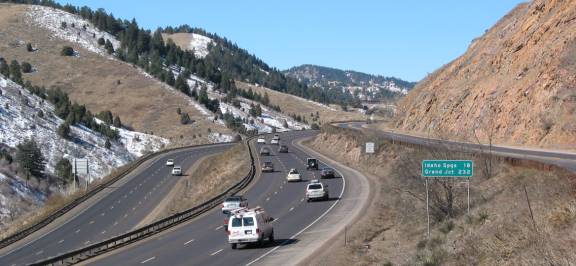
Exhibit 12 – I-70 Mount Vernon Canyon looking west
4 Evaluation Findings
CDOT believes Trip-70 has been a successful venture. Project goals and objectives were met or exceeded. Deficiencies in ITS infrastructure, functionality; automation; traveler information dissemination; data sharing; and amount, accuracy and timeliness of data were addressed across six task orders. The project dovetailed well with other ITS activities along the same corridor. Most importantly, the project has been an important building block and catalyst leading to greater and more visible enhancements in later projects along I-70 west of Denver. The program momentum generated by the earmarked projects – including Trip-70 – has allowed CDOT to develop order-of-magnitude improvements in: number of field devices; data collection and dissemination capabilities; communications; active interface with partners and stakeholders; and operations, maintenance and program management.
The following sections illustrate how the I-70 West Integration project met the established goals and objectives, discuss the task orders and overall project in terms of MOE, institutional issues encountered and lessons learned (the latter representing the two additional “elective” evaluation activities).
4A Trip-70 Outcome
A summary of how the project-specific goals and objectives were addressed by the individual task orders within the I-70 West Integration project are listed in Table 7.
Table 7 – Project Goals and Objectives Met By Task Order
# |
Task Order / Goals & Objectives Met? (Reference Goals & Objectives list below table) |
A |
B |
C |
D |
E |
F |
G |
H |
1 |
Vehicle Probes |
Yes |
Yes |
Yes |
Yes |
Yes |
|||
2 |
Web Integration |
Yes |
Yes |
Yes |
Yes |
Yes |
|||
3 |
Center-to-Center Integration |
Yes |
Yes |
Yes |
Yes |
Yes |
Yes |
Yes |
|
4 |
Low Speed Communications |
Yes |
Yes |
Yes |
Yes |
||||
5 |
DIA Integration Study |
Yes |
Yes |
Yes |
|||||
6 |
General ATMS Integration |
Yes |
Yes |
Yes |
Yes |
Yes |
Yes |
Yes |
Yes |
OVERALL PROJECT |
Yes |
Yes |
Yes |
Yes |
Yes |
Yes |
Yes |
Yes |
Table 7 Goals and Objectives List (from Section 3A):
A - Address ITS infrastructure deficiencies.
B - Create an ITS “success story” in Colorado.
C - Automate processes to minimize burdens on state employees.
D - Provide enhanced functionality
E - Improve dissemination of traveler information
F - Enhance availability of data for partner agencies
G - Enhance incident management capabilities
H - Improve amount, accuracy and timeliness of data flows into and out of the system
Goals and objectives were met. Pre-project deficiencies in infrastructure; functionality; automation; traveler information dissemination; sharing of data; and amount, accuracy and timeliness of data were addressed across the six task orders.
The following sections describe the results of the project within the context of the three evaluation categories developed through the goals, objectives and hypotheses. Because it is difficult to quantify integration activities in terms of the FHWA-suggested MOE for traffic operations, relative success of the project will instead be assessed and discussed qualitatively.
4A.1 Evaluation Category 1 – Data Infrastructure
Trip-70 improved transportation data availability by deploying more devices; automating processes; creating subsystems or data flows to improve data amount, accessibility, accuracy or timeliness; installing communications facilities to facilitate exchange; ultimately improving traveler information dissemination.
4A.1.1 Field Devices
Field devices implemented in the I-70 West Integration project were for data collection equipment needed to obtain speed and travel time measurements. Two types of devices were deployed: 1] AVI detectors, also described herein as Travel Time Indicators (TTI), were installed to measure point-to-point speeds; and 2] side-fired radar stations were constructed to augment the point-to-point data with spot speed information.
CDOT had planned at first to equip a small fleet of commercial transit vehicles with hardware that would allow travel time data to be broadcast to the CTMC via wireless CDPD communications. During system design, the FCC mandated the phase-out of CDPD, thus CDOT was forced to place the project on hold while a new wireless communications means was researched and selected (Ultimately, wireless CDMA provided by Sprint Wireless would be used; combined with direct connection of some units via fiber optic land lines installed by the FY03/04 I-70 West Corridor Management project).
During the delay, CDOT began entertaining the feasibility of using toll tag transponders in lieu of equipping the referenced fleet of commercial transit vehicles. Presence of two relatively new toll roads in the Denver area meant a fairly substantial transponder “population” was present statewide and was continuing to increase over time. CDOT determined a test of the application would be beneficial and deployed two such sampling stations along SH-470. Following successful testing at these sites, CDOT began deploying TTI along I-70 between Denver and Vail.
At each location and in each direction there are two antennas – one to broadcast and the second to receive. When a transponder-equipped vehicle traverses the detection zone, it receives the broadcast signal and sends back a response. The second antenna receives the response and sends it by coaxial cable to a reader housed in a pole-mounted cabinet. The reader develops an information packet that includes date, lane and direction, and tag number. This data is relayed to a programmable modem (also in the field cabinet) that adds a device address and time stamp before sending the information to the CTMC.
Exhibit 13 depicts travel time data obtained from the test TTI stations along SH-470. Note the sharp increase in travel time between the two sites during the PM Peak Hour.
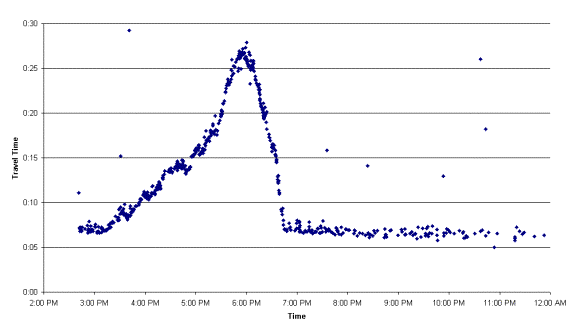
Exhibit 13 – Travel Time on SH-470 from TTI operational test (2004)
The “central” portion of this subsystem – in which data from different TTI stations is compared, filtered and applied to an algorithm to obtain the predicted travel time – was developed under the FY01 CTMC Integration project and is not a part of Trip-70.
The reader is also directed to Section 2C.1 of this report for additional information.
Trip-70 implemented a modest number of field devices, yet those deployed were critical to the success of the speed and travel time subsystems under development in the CTMC Integration project. Because there were no TTI or side-fired radar units along the corridor prior to the project, percent increases cannot be used. However, Trip-70 eventually deployed six (6) TTI units and ten (10) side-fired radar installations. The TTI stations included the following locations:
- SH-470 at Yosemite Street (operational test unit);
- SH-470 at Santa Fe Drive/US-85 (operational test unit);
- I-70 near Vail (MM 177.3);
- I-70 near EJT (MM 215.3);
- I-70 near Empire Junction/US-40 (MM 232.6); and
- I-70 near Evergreen/SH-74 (MM 252.8).
Additional TTI units were also installed using state funds. As of the date of this report, there are a total of 17 TTI units/stations along I-70 and SH-470. Additional locations include:
- I-70 at Copper Mountain (MM 195.9);
- I-70 at Silverthorne (MM 206.0);
- I-70 at Idaho Springs (MM 242.3);
- I-70 at Rooney Road (approximate MM 260);
- I-70 at Denver West Boulevard (approximate MM 263);
- I-70 at Ward Road (MM 265.5);
- I-70 west of I-25 (MM 273.3);
- I-70 east of I-25 (approximate MM 275);
- I-70 at I-225 (MM 283.2);
- I-70 at Colfax–East (MM 288.7); and
- SH-470 at US-285.
CDOT will continue to deploy additional TTI units as funding allows.
In addition to the TTI units, Trip-70 also provided the funding mechanism to install ten (10) side-fired radar units to augment the TTI database with spot speed information. Installation of all TTI and radar units was accomplished by CDOT and the ITS maintenance contractor.
4A.1.2 Behind-the-Scenes Enhancements
Many of CDOT’s more visible activities to enhance its internal automation capabilities and systems to improve data flow have been accomplished under previous or parallel earmarked projects. This does not imply that no activities in these areas were undertaken as a part of Trip-70; but that they were perhaps of lesser magnitude than in other projects and built on existing systems rather than creating new ones. The sections below identify and itemize the behind-the-scenes activities of Trip-70 that helped bolster CDOT capabilities to collect and process data and to disseminate traveler information.
Many of the work activities were accomplished through two or more task orders; therefore the following activities are generally not discussed within a task order framework.
Database, Automation and Subsystem Elements
Additional mountain weather stations and count stations were incorporated into CDOT’s existing multi-modal database; and the referenced side-fired radar units and TTI deployed as a part of Trip-70 were similarly incorporated. For the most part, these elements were initially placed on the new Sprint Wireless CDMA network. Once the I-70 fiber optic line was installed, tested and accepted under a separate earmarked project, many of the referenced elements were connected to the fiber optic line. Trip-70 also provided the up-front planning and the software drivers within its emerging ATMS/ATIS for the migration of the I-70 field devices from CDPD, CDMA and/or telephone to fiber optic connectivity. New drivers were written for the side-fired radar and TTI units to allow communications with the CTMC. Ultimately all the referenced data will be available on the Co-Trip website – once the travel time subsystem has been approved by CDOT management for public release.
CDOT was also able to establish improved connectivity to the HLT control facility through the provision of new end hardware and communications equipment. This allowed the CTMC to obtain data from the west slope DMS in Regions 3 and 5 that are controlled from HLT – and display the real-time message data on Co-Trip. The project also installed hardware and software at HLT to facilitate improved levels of video data exchange with the CTMC.
Communications Elements
CDOT developed a programmable modem (really a field computer to manage communications) to facilitate data exchange from the TTI sampling stations to the CTMC. The modem allows for accurate identification, packaging, timekeeping and transmission of data. Wireless communication via both the Sprint Wireless CDMA and the fiber optic backbone are supported. One modem is located in the pole-mounted cabinet at each TTI location and supports four antennas – two in each direction of travel.
At a macroscopic level, Trip-70 helped improve communications between the CTMC and City & County of Denver. The project funded splices and end equipment – multiplexers and so on – needed to establish a fiber optic connection from the CTMC to Denver Traffic Operations over existing CDOT and Denver-owned fiber. In a related activity, both parties began implementing additional splices needed to establish a connection from the Denver Traffic Operations site in east Denver to DIA; however at the conclusion of Trip-70 it is estimated three or four additional major splices remain, and end equipment is needed at DIA before that connection can be established.
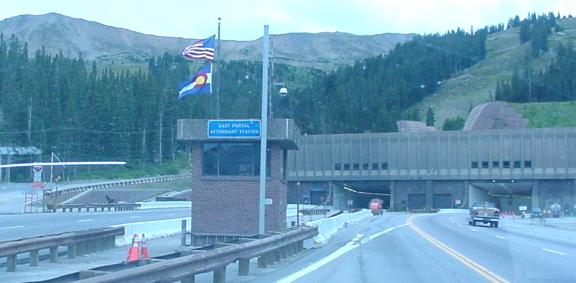
Exhibit 14 – East Portal EJT
Remaining Trip-70 communications work focused on the HLT facility in Glenwood Canyon and its ability to communicate locally and with the CTMC. A nearby forest fire had damaged microwave communication capabilities of HLT and its ability to communicate with CDOT facilities along the Front Range – including the CTMC. Trip-70 funds were therefore used to repair this link including a key communications tower. Repairs at the tower also allowed CDOT to establish a redundant T-1 communications link (in addition to the microwave connection) between the HLT and CDOT Headquarters. Note all communications between CTMC and the HLT are currently routed via microwave and/or T-1 from HLT to the Headquarters building in south Denver, and then over fiber to the CTMC – until such time as the I-70 fiber optic backbone can be extended from Frisco to HLT.
In a joint effort with CDOT Region 3, the project also purchased and installed about 11 miles of fiber optic cable for installation along I-70 through Glenwood Canyon, primarily to link ITS field devices with the HLT control center. This is a 36-strand cable with 24 strands used for local connectivity and 12 strands dedicated to the CDOT ITS Branch for statewide applications and was pulled through existing conduit by the ITS Branch. Hardware to support the installation (splice equipment, connectors, tools, etc.) was purchased from CDOT’s Shared Resources partner – a telecommunications provider who was in bankruptcy at the time. The fiber line linked the HLT with the Glenwood Springs residency offices at the base of the canyon. Work also included developing a local Glenwood Canyon communications architecture and deployment plan and furnishing, installing and testing pieces of the network. All work was completed by CDOT forces.
4A.1.3 Test/Evaluation of Hypothesis 1
Hypothesis 1 proposes that “CDOT capabilities to collect, compile and disseminate traveler information statewide will be enhanced. This is not limited to information dissemination with the general public but includes enhanced capabilities to exchange information with public agency partners.”
Trip-70 was successful in addressing Hypothesis 1. Capabilities to collect information were expanded through the deployment of additional field devices – although this was limited to 6 TTI units and 10 radar installations in this project; and the widespread communications activities that were undertaken. Compilation capabilities were augmented by bringing data in from new ATR and weather stations; developing the programmable modem for the TTI stations; and writing the device drivers for the TTI and radar devices. The most visible dissemination improvement was providing the west slope DMS messages on Co-Trip. Finally, information exchange was improved with HLT – setting the stage for enhanced information exchange with agency partners along I-70; which is discussed in additional detail in following sections of this document.
The improvements benefit CDOT in the following areas: 1] the increase in the size and composition of the CDOT database makes CDOT a more attractive partner for data-exchange with outside agencies; 2] development of these subsystems facilitates adding new ITS field devices to the system with little of no negative impact to CTMC operators; 3] the systems have yielded more accurate and timely information to CTMC operators, and ultimately the public via Co-Trip and roadway dissemination devices; and 4] the systems have increased the automation of processes, data availability and CTMC functionality.
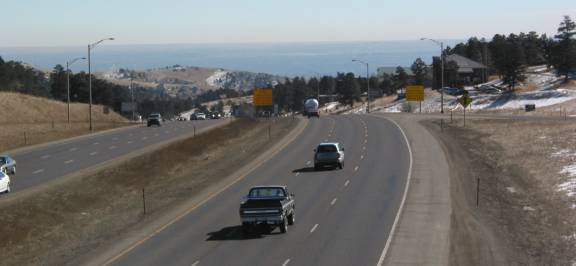
Exhibit 15 – Eastbound I-70 descending toward Denver
Although difficult to quantify, the Trip-70 task orders provided significant “behind the scenes” improvements to allow enhanced data flow and improvements in the day-to-day operations of the CTMC and HLT control centers.
4A.2 Evaluation Category 2 – Data Exchange
CDOT originally established a large multi-agency partnership along the I-70 West corridor about seven years ago. The group, which includes about 140 public works, transportation, enforcement, fire and emergency response personnel from cities, towns, counties, and state and federal government, was originally convened to develop the I-70 IMP that covers the corridor from Denver to the Utah State Line.
In addition to the IMP and Trip-70 projects, CDOT also has finished or is in the process of deploying additional earmarked projects for funds allocated in FY03, FY04 and FY05; and is working to develop the referenced speed and travel time subsystem using existing DMS along the mountain corridor. Finally, I-70 west of Denver is the subject of a programmatic environmental impact statement to develop, evaluate and prioritize potential transportation alternatives to improve capacity and safety. Leading and otherwise participating in these activities has provided CDOT with numerous opportunities to cultivate the multi-agency partnership and it is intact as of the date of this document.
Trip-70 improved transportation data exchange by improving communications between two key data concentration points, namely the CTMC and HLT control centers. The project also established the first of several connections to various City & County of Denver locations. Although no additional data exchange was attempted in this project due to its modest funding level, there is additional work underway in the corridor that begin establishing connections between CDOT and these agencies. Trip-70, therefore helped lay the groundwork for the planned, future information exchange between agencies that is currently being implemented.
4A.2.1 Test/Evaluation of Hypothesis 2
Hypothesis 2 proposes that “CDOT will have maintained and/or enhanced current ITS partnerships with other public agencies and developed new partnerships as possible.”
Trip-70 was moderately successful in addressing Hypothesis 2. Existing partnerships were maintained, but most project activities did not directly involve corridor partners; and although no new partnerships were developed, CDOT does have a large multi-agency partnership already in place along I-70. The work in this project instead laid the groundwork for future information exchange with outside agencies via ongoing or proposed efforts.
4A.3 Evaluation Category 3 – Intangibles
Previous needs in infrastructure; amount, type and flow of data; communications; and overall functionality have been addressed by the six project task orders. As Trip-70 was the first of many ITS projects in the corridor, it has also acted as a catalyst to attract additional corridor investment.
4A.3.1 Test/Evaluation of Hypothesis 3
Hypothesis 3 proposes that “CDOT will have taken advantage of the synergies created by the project as a catalyst for statewide, widespread ITS deployment through other projects and funding sources, in effect using Trip-70 as a springboard from which to promote ITS as a Colorado success story.”
Trip-70 was the first of three (to date) additional congressionally earmarked projects. The FY03 and FY04 projects were combined and deployed fiber optics from Denver to Frisco, automated the eastbound port of entry at Dumont, and established a small traffic management and information system at the Beaver Tail Tunnels near Grand Junction. Funds remaining in this project will be used to establish the first of the CDOT to agency communication links that are planned along the corridor. The FY05 project will construct ramp improvements including ramp meters at selected interchanges at Downieville, Empire Junction and Idaho Springs.
4B Elective Activity #1 – Institutional Issues
As its first elective activity for the local evaluation report, CDOT has chosen to recount selected institutional issues encountered during the project. Institutional issues can best be described as those items that are not technical in nature that needed to be overcome or otherwise addressed to achieve success in the I-70 West Integration project. These include items such as in-house expertise, coordination with stakeholders, partnerships, and organizational structures and processes. These items are discussed in additional detail in this section.
4B.1 Deployment Team Expertise
Installation, operation and maintenance of ITS systems requires personnel with specialized technical skills including expertise in non-traditional civil engineering areas such as computer networks, communications, computer hardware and peripheral equipment, electronics, the Internet, software development, databases, and protocols to allow these elements to interact. At the project outset CDOT had one task manager who was well-versed in these areas with only limited expertise among the remainder of CDOT staff.
Fortunately, over a relatively short time, CDOT was able to greatly enhance its expertise in networking, hardware, electronics, the Internet, software development and databases – allowing CDOT to complete the I-70 West Integration project virtually in-house. By project conclusion, the CDOT ITS Branch had greatly increased its internal technical skill sets in these categories by adding several full-time and/or contract employees.
Many non-traditional Department of Transportation tasks such as communications and network architectures; web site development; database enhancements; development of device drivers; electronics set-up and installation for cameras, switchers and multiplexers; and so on were thus successfully completed by CDOT. As a result, CDOT has come to the conclusion that non-traditional in-house skill sets are an indispensable resource most definitely required for success in complex ITS projects.
4B.2 Coordination with Stakeholders
CDOT was fortunate the I-70 IMP and the FY98 earmarked project (I-25 Truck Safety Improvements) immediately preceded Trip-70 because an extensive multi-agency partnership was already in place. The existing partnerships had previously established the names of contact persons and lines of communication and outlined the parameters of working together to achieve common ITS goals. These elements were reinforced via a number of Letters of Agreement, Memoranda of Understanding and Intergovernmental Agreements. Those key CDOT ITS partners most involved with Trip-70 included:
- City & County of Denver;
- Colorado State Patrol (CSP);
- Denver International Airport (DIA);
- Denver Police Department (DPD);
- Denver Regional Council of Governments (DRCOG); and
- University of Colorado at Denver (UCD).
As described, the corridor-wide partnership that remains involved in multiple projects along I-70 is much larger and is described in more detail in the following section.
Establishing such partnerships was by no means easy ten years ago. Issues overcome during the coalition building phase included: 1] educating the partnership on ITS in general; 2] selling the participants on the need for, and benefits of ITS; 3] laying the groundwork for a team – rather than individual agency – approach; and 4] developing interpersonal relationships based on trust between partners. As a result, the core I-70 corridor partnership remains intact to the present day.
Affected agencies were involved throughout their respective task order(s). Common activities typically included reviewing the initial scope of services; attending the kick-off meeting; attending regular project technical or coordination meetings; working with CDOT on day-to-day coordination; and providing support services, technical review or installation with their own employees.
4B.3 Agency Partnerships
Although no new partnerships were created during Trip-70, CDOT maintains an extensive partnership structure with the public works, enforcement and emergency response agencies that reside along the I-70 mountain corridor. Those partnerships were maintained over the course of the project through parallel but separate projects. These include but are not limited to:
- Other ITS projects from FY00, FY01, and FY03-FY05.
- Development of Regional ITS Architectures (RITSA).
- Ongoing work for the Programmatic Environmental Impact Statement (PEIS).
The number of new partnerships developed over the recent five-year period in parallel projects is probably too numerous to itemize completely but includes the following broad categories of participants.
- Police and Sheriff’s Agencies : Eagle County, Vail, Breckenridge, Dillon, Frisco, Silverthorne, Summit County, Clear Creek County, Empire, Georgetown Idaho Springs, Golden and Jefferson County.
 Transportation and Public Works Agencies : Eagle County, Vail, Dillon, Frisco, Silverthorne, Summit County, Clear Creek County, Georgetown, Silver Plume, Idaho Springs, Golden and Jefferson County.
 - Fire and Emergency Response Agencies : Eagle County Ambulance, Vail Fire, Copper Mountain Fire, Lake Dillon Fire, Lower Blue Fire, Red White & Blue Fire, Summit County Ambulance, Clear Creek Ambulance, Evergreen Fire and Ambulance, Foothills Fire & Rescue, Genesee Fire & Rescue, Highlands Fire & Rescue, Pleasant View Fire, West Metro Fire & Rescue.
- Emergency Management Services : Colorado Office of Emergency Management (OEM); Eagle County, Summit County, Clear Creek County, Jefferson County.
- Other Federal and State Government : FHWA, US Forest Service, US Bureau of Land Management, Colorado Department of Revenue, Colorado State Patrol (CSP).
Exhibit 16 – I-70 looking east near Fall River Road
CDOT’s conclusion is that inter-agency partnerships are valuable resources to the ITS Program. Not only do such working relationships facilitate successful day-to-day operation, but open talk and interactions help form a solid foundation from which to build future ITS initiatives. Recurring communications with partners – even though they may not be actively involved at the moment – also helps maintain an atmosphere of cooperation and agreement.
4B.4 Task Order Structure
Previous ITS projects were subdivided into a number of smaller activities, or task orders. Although this is not the traditional format for most CDOT projects, the task order subdivision of the I-70 West Integration project provided a number of apparent advantages. These included:
- Better cost tracking of all labor and direct expenses on a task basis . Because each task was broken out separately, it was easier for the CDOT management team to identify areas incurring a potential over-run, as well as areas not incurring sufficient labor to meet schedules. Overall, the task order system was deemed superior in tracking and controlling costs and will generally be retained for future ITS projects.
- Better schedule tracking on a task basis . Because schedules were reported on bi-weekly, it was easier for the CDOT management team to identify areas encountering schedule difficulties. Again, the task order system was deemed superior in identifying critical scheduling issues as they arose.
- Better subdivision of CDOT management responsibilities . Because CDOT assigned a number of task managers to the project, it had more “eyes and ears” available to actively monitor progress of the work across multiple task areas.
- Modular aspect of the deployment . In the previous ITS projects, a single large deployment was tasked for delivery at one time. This system ultimately led to major disagreement and controversy. The modular aspect of ITS delivery yielded by the task order system allowed the work to be better organized and helped ensure delivery and acceptance of the required product on budget.
CDOT’s conclusion is that breaking the project into smaller, individual task orders is a positive means to maintain control over most elements of large-scale ITS projects.
4C Elective Activity #2 – Lessons Learned
As its second elective activity for the local evaluation, CDOT has chosen to summarize its experiences on the project in a lessons learned format.
4C.1 Administrative Items
Conclusions apparent at the completion of the I-70 West Integration project include the following:
- In-house expertise in ITS specialty areas is beneficial . CDOT believes that had it had the current levels of in-house expertise throughout the project, some difficulties at the outset could have been lessened or avoided. Addition of these skill sets ultimately allowed CDOT to subdivide technical responsibilities for completion of multiple task orders between several capable and knowledgeable individuals – rather than two or three “thinly spread” individuals. CDOT believes in-house skills in ITS-related technical areas are an indispensable resource definitely required for success in complex ITS projects.
- Although task order project configuration is not necessarily more efficient for a contractor (if one is involved), it provides a better mechanism for the owner to track progress and control schedules and costs . Task order configuration provided much better control than did previous ITS projects that dictated delivery of one large product at the end of the schedule. A small amount of additional time is required on part of the owner in a task order environment to better monitor progress on a greater number of total activities. Task order configuration has been kept for later and ongoing Colorado earmarked ITS projects as applicable.
- Open communications are critical to success . Frequent communications engender trust and are critical to success in a multi-agency project environment.
- Economies of scale can be realized . For example, on task orders including the participation of the City & County of Denver, the agency participant contributed to the project in terms of purchasing, in-kind services, assistance in obtaining related services or contracts, or the provision of ancillary materials. The result of such partnership was deployment with a total value exceeding that originally planned. These partnerships have helped set the basis for additional coordinated work in the future with the same partner and also set the basis and example for such participation with new agencies as part of future projects.
4C.2 Systems Engineering
Although these items are discussed in more detail in Appendix A, the application of systems engineering principles benefited CDOT in a number of ways. Lessons learned include the following:
- Alternatives Assessment . When the FCC dictated the end of CDPD wireless technology, CDOT was forced to evaluate alternatives for its replacement. A Sprint Wireless CDMA configuration was ultimately selected.
- Risk Management . CDOT determined a technology change from a small fleet of probe vehicles to the TTI technology that was ultimately deployed was the least-risk means of obtaining a more widespread and accurate data collection network to obtain vehicle speeds and travel times. Although project funds were initially expended on the fleet concept, the change ultimately yielded a much more comprehensive and granular database and will ultimately be much more cost-effective.
Again, these and other lessons learned in the area of systems engineering are described in Appendix A. These principles were actually applied much more intensively in the CTMC Integration project – also an FY01 earmark.
I-70 West Integration Project (“Trip-70”)
Local Evaluation Report
Appendix A: Compliance with FHWA Final Rule
The FHWA Final Rule and FTA Policy for Applying the National ITS Architecture (NITSA) at the Regional Level requires ITS projects implemented with monies from the Highway Trust Fund conform to the NITSA and ITS standards. Regional Architecture conformance is a condition of FHWA acceptance for major ITS projects, defined as “any ITS project that implements part of a regional ITS initiative that is multi-jurisdictional, multi-modal, or otherwise affects regional integration of ITS systems.” The I-70 West Integration project matches this definition, thus the Rule calls for three conditions to be met: 1] demonstration of compliance with regional architecture(s); 2] use of systems engineering; and 3] use of appropriate ITS standards. This appendix describes how the Trip-70 Project complies with the Rule.
Colorado has several Regional Architectures finished; therefore information from these is used herein to demonstrate compliance. Systems engineering principles were used on this project in various intensities depending on the specific activity. Finally, ITS standards were used as applicable, but due to the emerging nature of these at the time, such opportunities were limited in this project. CDOT has a Standards framework in place for use project-by-project and is considering developing a Standards Plan to govern ITS deployment statewide.
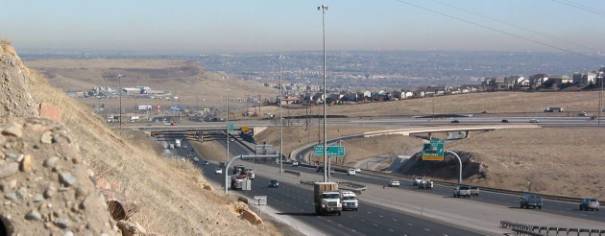
Exhibit A1 – I-70 Denver outskirts looking east
A1 First Condition - Regional Architecture Compliance
A number of Colorado Regional ITS Architectures (RITSA) are complete, superseding the National Architecture previously used as a statewide guide by CDOT. Three RITSA apply to this project, covering portions of I-70:
- The Denver RITSA covers I-70 in Denver, Jefferson and Clear Creek Counties east of Mile Marker (MM) 210.
- The Southeastern Colorado RITSA covers I-70 across Summit County east of MM 185 (west).
- The Western Colorado RITSA covers I-70 through Eagle and Garfield Counties east of MM 120.
Trip-70 was finished prior to completion of the latter two, and a previous statewide “regional” architecture was used to demonstrate compliance then; but to illustrate current conformance, the three RITSA will be used.
CDOT realizes the importance of building its statewide system using RITSA guidelines. The Denver, Southeastern Colorado and Western Colorado RITSA identify functions already provided by CDOT as cornerstones of the regional transportation systems. For example, all identify Road Weather Information Systems, Incident Management and Traffic Information Dissemination as core elements – services already provided by CDOT and well-established over many years. Additional proposed functions were also identified in the RITSA for functions not currently provided or not otherwise called out in NITSA documentation. For example, the Western Colorado RITSA calls out “Tunnel Management” as a core element – a market package not currently in the NITSA. Similarly, the Denver RITSA identified market packages (ITS Data Mart, Multi-Modal Coordination, Railroad Operations Coordination, etc.) as subsystems to be accommodated although they are not currently deployed in Colorado. Using the RITSA as a guide, CDOT has subsequently been able to incorporate these elements in its strategic planning activities for statewide ITS deployment.
A1.1 CDOT Compliance with First Condition
The Denver, Southeastern Colorado and Western Colorado RITSA meet the conditions outlined in the FHWA Final Rule. During requirements development undertaken as part of a separate earmarked project, CDOT configured the elements in the proposed build-out ATMS/ATIS to match the recommendations of the RITSA – an activity that continues over time as the statewide CTMS develops. Activities undertaken in the I-70 West Integration project fit within the ITS umbrella configuration suggested by the three architectures and a composite view of all three will for the most part be used to demonstrate compliance.
A1.2 Colorado Regional Architectures
The Denver RITSA was completed in 2001 and the Southeastern and Western Colorado RITSA completed in 2005. These documents provide the regions with the frameworks required to achieve institutional agreement and technical integration of ITS projects. When Trip-70 began, Colorado was using the NITSA as its guide for ITS development. The scopes of work for early ITS projects – including this one – were therefore developed without the guidance of a RITSA to serve as a project configuration resource. Individual task orders were developed and submitted to FHWA to demonstrate compliance with the NITSA, thereby meeting the conditions of the interim rule in effect at that time. As a consequence of this timing disconnection as well as funding constraints, not all market packages identified in the Colorado RITSA are accommodated in this project. A few task orders trace to multiple RITSA market packages, while others are addressed by only one or two. It was therefore felt more prudent for this project to frame the architecture compliance discussion in terms of proposed ITS Core Strategies. Table A1 identifies statewide core services and strategies included in the three applicable RITSA. Note that Table A1 is a list of statewide strategies.
Table A1 - Colorado Regional Architectures; Statewide Core Services and Strategies
Colorado Statewide |
Strategies Developed in RITSA Planning |
Traffic Management |
Establish active traffic management in priority corridors |
Traveler Information |
Continue statewide deployment of devices to collect pre-trip & en-route travel planning information. Develop the ATIS and disseminate statewide traveler information. |
Incident Management |
Use real-time road condition data to assist in incident response. Use active traffic management to reduce congestion arising from recurring & non-recurring incidents. Provide traveler information about incidents. |
ITS Maintenance |
Establish a statewide ITS maintenance planning, replacement, budgeting process. |
ITS Planning and Project |
Conduct statewide ITS deployment planning and provide leadership for implementing statewide ITS enabling infrastructure. Use performance measures to evaluate ITS. Institutionalize ITS into the statewide and regional planning processes. |
Enabling Infrastructure |
Deploy ITS enabling infrastructure statewide. |
Project Delivery Support |
Establish statewide ITS device procurement specifications/guidelines. Establish guidelines for device inspection/acceptance. Establish statewide design standards for ITS systems/devices. |
Trip-70 complies with the various RITSA at the statewide level as described below but does not necessarily address each of the statewide core services.
- Traffic Management in priority corridors was addressed by Trip-70 through providing communications and video surveillance infrastructure to help CDOT better observe operations along I-70 – Colorado’s top priority rural corridor.
- In Traveler Information, Trip-70 did not include widespread field deployment, but did include data collection devices to help monitor travel time. In addition, web upgrades in Task Order 2 and the enhanced communications capabilities in Task Orders 4/6 allowed CDOT to upgrade availability and quality of its pre-trip travel planning information.
- Incident Management was addressed, primarily as a subset of the Traffic Management core service.
- Maintenance , Planning and Project Prioritization, and Project Delivery Support are three strategies being addressed by CDOT as part of stand-alone activities separate from Trip-70.
- Enabling Infrastructure is addressed by Trip-70 through the provisions of communications and data exchange infrastructure including multiplexing equipment, video switchers and so on.
All three RITSA call out detailed strategic services to form the backbone of the proposed ITS build-out system. Although these differ slightly between RITSA, many are the same across all three and are listed in Table A2.
Table A2 – Colorado Regional Architectures; Regional Strategies
Colorado Regional ITS Strategic Services |
Strategies Developed in RITSA Planning |
Incident Management |
Complete the recommended improvements for the I-70 Mountain Corridor IMP. Implement Road Closure Management and RWIS for major passes. |
Freeway Management |
Deploy feasible freeway management strategies on I-70 in Clear Creek and Summit Counties. |
Traveler Information |
Deploy additional sensors along I-70 to monitor traffic conditions. |
Transit Management and Multi-Modal Coordination |
Develop transit management systems. |
Safety Management |
Employ emergency response system(s) for I-70. |
Communications and Connectivity |
Install fiber optic communications from Frisco to HLT along I-70. |
At the project outset, the Communications and Connectivity strategic service would have included the installation of fiber optic communications from Denver to Frisco. In the interim, the FY03/FY04 earmarked project has successfully designed and installed this link – which is why it does not appear in Table A2. Specific traceability between the Task Orders of the I-70 West Integration project and those Regional Strategies best fitting each task order appears in Table A3.
Table A3 – Trip-70 Task Order Traceability to RITSA
Trip-70 Task Order |
Applicable RITSA Strategies |
Vehicle Probes |
Address freeway management in Clear Creek and Summit Counties. |
Web Integration |
Develop reporting mechanism for road conditions. |
Center-to-Center (C2C) Integration |
Complete the recommendations of the I-70 IMP. |
Low-Speed Communications |
Deploy additional sensors. |
Denver Int’l Airport (DIA) Integration Study |
Develop stakeholder interfaces. |
General ATMS/ATIS Integration |
Complete the recommendations of the I-70 IMP. |
Trip-70 is perhaps not the best “fit” with the Regional Architectures developed concurrently or later – due to its focus on communications and integration – however the project is a subset of the larger CTMS, which also includes additional earmarks in FY98 through FY05.
As part of the overall CTMS program, market packages of applicable RITSA have been accounted for in planning and requirements development for the new ATMS/ATIS command and control system, currently in early development and implementation stages. Generally, the Trip-70 focus on communications and integration means the project has helped form the technical basis for larger, more visible successes in later projects, while only indirectly referencing specific market packages and core services. In any case, CDOT feels Trip-70 traces acceptably to the Colorado Regional Architectures – albeit more in intent than specificity.
Additional documentation describing the individual RITSA and architecture traceability within the overall CTMS program – specifically the new ATMS/ATIS – is available from CDOT under separate cover.
A2 Second Condition – Systems Engineering Approach
A “system” is an aggregation of end products and enabling products to achieve a purpose. Systems engineering provides a structured mechanism in complex project development with checks and balances to: 1] reduce risk; 2] control costs and schedules; 3] satisfy user needs; 4] improve quality; and 5] meet various regulations and rules. Systems engineering defines ways of doing things, tools, techniques and a structured way of thinking to implement complex projects. As paraphrased from the Rule, systems engineering requires the deployment team address the following items (lettered A-C for convenience):
- A] Identify alternatives at each step of building the system.
- B] Evaluate alternatives based on cost, political/technical considerations and customer needs.
- C] Consider what risks exist throughout the process and plan for their management.
In addition, for ITS projects, the Rule requires the systems engineering analysis include the following activities and items (lettered D-J for convenience):
- D] Identification of portions of the Regional ITS Architecture being implemented.
- E] Identification of participating agencies’ roles and responsibilities.
- F] Requirements definitions.
- G] Analysis of alternative system configurations and technology options to meet the requirements.
- H] Procurement options.
- I] Identification of applicable ITS standards and testing procedures.
- J] Procedures and resources necessary for operations and management of the system.
Specific strategies used in the CDOT approach to Trip-70 are in the following sections. The final subsection summarizes steps CDOT has taken to deploy a program-wide systems engineering framework to cover the deployment of ITS elements statewide.
A2.1 CDOT Compliance with Second Condition
The following items demonstrate how CDOT has met the Second Condition for Trip-70. Similar systems engineering activities are grouped for common discussion. Because the work was a mixture of deployment and integration activities, certain task orders and sub-tasks are a better “fit” for a systems engineering approach than others. Finally, some of the discussions that follow are framed within the context of the overall CTMS and are not necessarily specific to Trip-70.
A2.2 Alternatives Assessment
CDOT has completed alternatives assessment during Trip-70 in accordance with the following Federal Rule requirements:
- A] Identify alternatives at each step of building the system.
- B] Evaluate alternatives based on cost, technical and political considerations.
- G] Analyze alternative system configurations and technology options to meet requirements.
Alternatives assessment is a cornerstone to systems engineering success – particularly in design. Such assessment outlines strengths and weaknesses of proposed and alternate systems; helps evaluate institutional compatibility; helps estimate initial and life cycle costs; helps evaluate against constraints; and helps in the evaluation of technical and operational feasibility. Alternatives analysis is the “bridge” between requirements and specifications (which define the “how” aspect of system functionality that was deliberately ignored in requirements development). Often, specification development and preliminary system design efforts are concurrent.
Based on events that have transpired in Colorado ITS program history, CDOT is unwilling to proceed with system design without close analysis and evaluation of alternatives. Due to constrained budgets, value engineering was applied throughout the planning, design and implementation phases to help identify the best means to achieve the desired final system products. A high-level summary of alternatives analysis done for the Trip-70 task orders is in Table A4.
Table A4 - Systems Engineering; Alternatives Analysis
No. |
Task Order Description |
Alternatives Analysis Summary |
1 |
Vehicle Probes |
Probe concept changed mid-stream from mountain transit vans with wireless modems plus radar detectors to toll transponders in the general vehicle population plus radar detectors; alternatives also investigated to replace CDPD communications. |
2 |
Web Integration |
Add to web functionality based on previous architecture; no alternatives analysis.* |
3 |
C2C Integration |
Video integration built on previous architecture; no alternatives analysis.* |
4 |
Low-Speed Communications |
Deployment task; equipment specified for field devices; no alternatives analysis.* |
5 |
DIA Integration Study |
Video integration built on previous architecture; no alternatives analysis.* |
6 |
General ATMS/ATIS Integration |
Deployment task; equipment specified for field devices; no alternatives analysis.* |
*Alternatives analyses were conducted in previous or parallel projects to develop existing and/or previous system architectures. See Local Evaluation Report for FY98 Earmark and project documentation for CTMC Integration Project (stand-alone FY01 Earmark) for additional information.
A2.3 Risk Management
CDOT addressed risk management during Trip-70 in accordance with the following Federal Rule requirement:
- C] Consider what risks exist throughout the process and plan for their management.
When problems occur in system development they can have a profound impact to costs and schedule. CDOT believes one key to avoiding common or unforeseen risks lies in planning ahead. Sources of “generic” risk in systems engineering generally lie in one of the following areas: 1] technology; 2] people; 3] physical environment; 4] political environment; and 5] contracting. In addition, the most frequent risks in ITS projects are: 1] personnel shortfalls; 2] unrealistic schedules and/or budgets; 3] functions and/or user interface incorrect; 4] gold-plating; 5] requirements changes (scope creep); 6] component shortcomings; 7] external dependencies (subcontractors, partners, etc.); 8] real-time performance shortfalls; and 9] unrealistic technical requirements. CDOT has hands-on experience addressing nearly all of these risks in past ITS projects including this one. When developing a risk management program to “plan” for these occurrences, it is important to remember no one can ensure the risks cannot occur. One can however, plan to reduce their probability of occurring and implement procedures to address risks as they happen.
Mitigation of such scenarios is accomplished through establishing a risk tracking and monitoring plan that is carried through the project as part of the meetings of the management team. Important considerations in plan set-up include: 1] identifying “symptoms” of generic and ITS-specific risks; and 2] defining the frequency with which symptoms are checked. When risks are identified, the plan provides resolution measures – an agenda of actions for identified risks. These are achievable and describe anticipated results. Keys to success are: 1] knowing the risks; 2] understanding their impact; 3] planning for mitigation; 4] monitoring performance; 5] executing the plan; and 6] obtaining stakeholder and partner buy-in.
Changes to major ITS projects in design are inevitable. Uncontrolled small changes can have major impact to costs and schedules. Events that cause change requests include: 1] errors in components; 2] external factors such as legislation; 3] advances in technology; 4] additional capabilities requested by users; and 5] “improved” solutions proposed by the technical team. Because changes are inevitable and can be frequent if not controlled, it is essential to establish a technical “baseline,” controlling how changes are made, and communicating approved changes to all of development team. Such a mechanism is Configuration Management. Generally, four activities are involved:
- Definition . The baseline configuration is the starting point or definition of the current system and includes all elements – hardware, interconnections, software, documentation and test procedures.
- Status accounting . This activity keeps track of the status of configuration-controlled items.
- Change control . This activity restricts changes to only those that are essential and affordable.
- Audits . These are undertaken periodically to double-check that configuration management processes are adequate.
Items subject to configuration management include: 1] system requirements; 2] interface control documents; 3] design documentation; 4] hardware technical data packages; 5] user and maintenance manuals; 6] test plans, test procedures and test reports; and 7] training materials. These were each used much more extensively in the parallel CTMC Integration Project – during which CDOT established a Configuration Control Board to help limit scope creep caused by requests for changes. The Board reviewed all proposed changes for impacts to budget and schedule and prioritized these – identifying those to be implemented as well as those to be postponed or deferred. The board included managers (CDOT, integrator, and system manager), a key user representative, a senior manager with funding responsibility and the configuration manager; and met periodically whenever there were enough changes to consider – with “enough” defined as a single, significant change or multiple small changes. The Configuration Control Board helped identify and track risks with the following risk areas typically included:
- Risks related to managing system requirements.
- Risks related to system development life cycle management.
- Risks related to managing customer (user) requirements.
- Risks related to technical and support personnel.
- External risks.
- Risks related to development methods and tools.
Controlling the impact of change can perhaps best be accomplished by building in increments. If not possible, when changes do occur, configuration management can allow changes to be deferred to later “versions” (a principle used in the overall CTMS project) – as well as forcing justification for changes, even minor ones.
A2.3.1 Trip-70 Risk Management – Vehicle Probe Task Order Technology Change
CDOT applied risk management principles during Trip-70, with one example being a fairly typical scenario for ITS projects. In this case, the design team recommended a technology change during development of the Vehicle Probe task order – primarily as a result of changing external dependencies. In this case, need to re-assess the probe subsystem configuration was driven by the proposed elimination by the Federal Communications Commission (FCC) of Cellular Digital Packet Data (CDPD) wireless communications. Originally, the probe subsystem was planned to operate using transit vans traversing I-70 from DIA to Vail, and CDOT’s partner in this endeavor, the University of Colorado at Denver (UCD), identified Colorado Mountain Express as the primary probe carrier. Each vehicle was proposed to be outfitted with a combination Global Positioning System (GPS) receiver and wireless communications device identified as a Location Messaging Unit (LMU). The LMU was intended to periodically transfer GPS information to CDOT via wireless CDPD technology. A number of radar detection stations were proposed and deployed to augment the probe database; with these expected to also use CDPD.
Shortly after CDOT and UCD decided to move ahead with the referenced configuration, the FCC announced a regulatory action dictating phase-out of CDPD in the immediate future. CDOT placed design activities on hold – a delay that eventually lasted 18 months – while it researched available options to replace CDPD. Ultimately, the majority of these communications would be replaced by the fiber optic backbone deployed under the FY03 and FY04 earmarks. Radar units west of Frisco and isolated units to the east would have communications provided by a replacement cellular carrier (Sprint Wireless was selected following a proposal process).
During the delay, CDOT began investigating the possibility of using toll tags (transponders) as a potential replacement for the probe half of the speed/travel time subsystem. Presence of two new toll roads in Denver meant that a substantial transponder “population” was present statewide and was continuing to increase. Advantages of using transponders were: 1] the technology was more proven and dependable in the transportation environment than the LMU; and 2] a greater population of vehicles was available, increasing amount of data for this application by an order of magnitude. CDOT determined a test of the transponder application would be beneficial and deployed two such sampling stations in Denver to evaluate system viability. Following a successful test, CDOT made the determination that transponders were a more cost-effective and less risky long-term proposition.
A2.4 Regional Architecture Implications
The FHWA Rule requires CDOT complete the following activities as part of the I-70 West Integration project:
- D] Identify the portions of the Regional ITS Architecture being implemented.
The Rule requires such identification and because the high-level CTMS requirements were developed using the Denver RITSA as a guide, all new modules and subsystems will be, by definition, part of the RITSA. Note that the Southeastern Colorado and western Colorado RITSA have been checked against Trip-70 for architecture compatibility. See Section A.1.2 for additional information regarding RITSA compliance.
A2.5 Roles and Responsibilities
The FHWA Rule requires CDOT complete the following activities as part of Trip-70:
- E] Identify participating agency roles and responsibilities.
These were identified early in the CTMS systems engineering process – although not specifically for this project – through development of Operational Concepts. Because CDOT is familiar with systems engineering in ITS deployment due to using a similar approach on previous projects, the initial Operational Concepts development was relatively straightforward as it was applied in this project – primarily to the concept of video image exchange as it pertained to HLT. The Operational Concepts define the following at a high level:
- Deployment strategy.
- Activities to be performed.
- Organizational relationships and responsibilities.
- Information flows.
- Message priorities.
- Archiving needs.
- Administration (including access and security).
- Define critical parameters.
- Determine preferred life cycle.
- Define operating environment.
Operational Concepts are usually the first task undertaken in an integration activity for good reason – they define relationships between systems and organizations. An agency or partnership of agencies cannot successfully build a system until the processes it supports have been defined.
Operational Concepts are an important first step in “traceability” – in which a numbering system is developed to allow concepts to migrate to requirements, then specifications and later, tests. Traceability ensures important and desired aspects of the system are not overlooked or forgotten later. CDOT has existing Operational Concepts documents for a number of interfaces – and although the one depicting the CTMC/HLT relationship is somewhat dated, CDOT feels it still provides a solid foundation on which to proceed. Ultimately, modifications or updates to these Operational Concepts are required and will be undertaken at a later date.
A2.5.1 I-25 Trip-70 Roles and Responsibilities – HLT Example
CDOT previously determined roles and responsibilities for various interfaces between the CTMC and external systems. One of these was with the HLT. Objectives of the interface included the following:
- Provide bi-directional sharing of information including traffic, incident and weather data.
- Provide bi-directional CCTV command and control subject to operational protocols. All HLT and a subset of CTMC cameras should be available.
- Provide CTMC with the ability to control HLT ITS devices.
- Allow CTMC and HLT to request messages be set on the other party’s DMS and HAR.
- Provide ability for CTMC to monitor HLT system (i.e. device status and network performance); and, in unique situations, to provide back-up operations.
- Provide functionality to support a corridor management system along I-70. This will utilize the bi-directional information sharing function, and device access and control functions. It also opens electronic lines of communication between operators of each TMC.
The agreed upon approach to achieve more seamless operation between the CTMC and HLT consists of multiple steps to improve communications, overall systems capabilities and integration, with the first three accomplished in this project: 1] achieving redundant communications between CTMC and HLT; 2] upgrading HLT “central” video subsystem hardware and software; 3] installing communications between HLT and the Glenwood Springs residency.
A2.6 Requirements
The Federal Rule requires that CDOT complete the following activities as part of Trip-70:
- F] Requirements definitions.
System Requirements define “what” a system is supposed to do – not “how” it is to be accomplished. CDOT has had success developing requirements using a hierarchy – beginning with high-level requirements and developing those in ever-increasing detail. Requirements are written to address multiple aspects of a system, for example, functions, performance and interfaces – as well as enabling requirements such as development strategy and speed, testing, deployment and support.
Characteristics of good requirements are that they are: 1] clear and unambiguous; 2] complete; 3] measurable; 4] consistent between each other; 5] achievable; 6] testable; and 7] in line with user, owner and developer expectations.
To ensure requirements are complete, consistent, concise and correct, CDOT typically institutes a series of requirements “walk-through” meetings with participation by all affected partners. Such meetings are held as a minimum at initial development, at each evolutionary phase and whenever multiple requirements are changed. Participants include CDOT, affected partners, the project managers of the various entities and the system developer. The purpose of the walk-through is to: 1] clarify; 2] ensure common understanding; 3] agree on constraints; 4] prioritize (and eliminate unnecessary requirements); and 5] discuss changes since the last walk-through.
CDOT has completed a definition of high-level requirements for the ongoing ATMS/ATIS (although extremely detailed requirements were completed by the Integrator for portions of the system to be deployed). These are typically reviewed via requirements “walk-through” reviews before proceeding to the build stage of software iteration. Although not directly part of Trip-70, such requirements were developed for the speed map and travel time subsystem as described in the following section – under the CTMC Integration Project.
A2.6.1 Trip-70 Requirements – Probe Subsystem
One minor subset of hundreds of requirements developed for the CTMC Integration project follows.
The items listed are within the “Get AVI Data” portion of the speed and travel time system – thus there are many, many more such requirements not reproduced here. Items listed below outline basic flow of events in terms of requirements needed for the system to obtain data from tag readers (defined herein as Automated Vehicle Identification or “AVI”).
- The CTMS shall attempt to set a connection with each known AVI reader in one of the following states: OK, IGNORE and FAILED.
- For each AVI reader the system shall issue an instruction to connect to it.
- The system shall wait for the instruction to return (successfully complete) within 5 seconds (configurable parameter).
- The system shall successfully connect to the AVI reader. The system shall attempt to maintain this connection open.
- When an AVI reader receives a Tag Read, the device shall send the following data to the system: AVI Reader ID, Lane Number, Tag ID and Tag Read date. CTMS shall be able to handle simultaneous requests from all AVI readers and record the data as soon as the AVI reader sends.
- The system receives a Tag Read from an AVI reader. The Tag Read Date shall be the current time/date of the system. The system shall discard the collection data specified by the AVI reader (because the readers lose time).
- If the status of the AVI reader is FAILED, the system will set it to OK.
- The system shall attempt to match the Tag Read from the AVI destination reader with all its source readers.
- In the event the Tag Read is matched, the system shall calculate the speed for this given vehicle between the two readers and shall record the data. The following data shall be saved: Match Time, Tag ID, Speed, Seconds, AVI Reader Source ID, AVI Reader Destination ID, Tag Read Source Date, Tag Read Destination date.
Many additional steps are required to successfully process this data, combine it with supplemental loop and radar information, (collected by a stand-alone but similar process) and eventually post the applicable portions of a speed map or travel time display. Those steps are not listed here because the referenced work was accomplished as part of the CTMC Integration Project – not Trip-70. The information above is provided for the reader’s information only.
A.2.7 Procurement
The Federal Rule requires CDOT investigate the following as part of the I-70 West Integration project – specifically intended to focus on software.
- H] Procurement options.
Only limited software acquisition and development was undertaken in this project. One acquisition provided the means to operate the CCTV subsystem at HLT – but was based on the outcome of an earlier investigation completed by CDOT in the FY98 earmark project. Other minor software development work was completed to: 1] modify the multimodal database by bringing in more weather station data; and 2] develop the speed map and travel time subsystems – really the second iteration of the CTMC Integration Project.
The principles outlined below are targeted at a large-scale ATMS/ATIS development or procurement. These are outlined here for information only as they apply more to the CTMC Integration Project than to Trip-70. CDOT realizes software development will not be perfect, nor is there a magic formula available to cure all software shortcomings. Because CDOT has had the opportunity to participate in large-scale software development efforts, it has identified guiding principles to consider in similar projects. Software acquisition is collaborative. This principle extends beyond organizational boundaries to include multiple parties – especially the Integrator, who is best suited to evaluate cost and schedule ramifications of seemingly innocuous requirements. No single agency or individual has the skill required to evaluate all aspects of a software acquisition or software development. Skill sets required include hardware, software and systems engineering, contracting and legal expertise. Individual participants with a portion of these skills can bring different perspectives to a problem along with their expertise. Partner agencies are potentially valuable participants who can provide additional advice.
Because most previous CDOT projects have dealt with construction, CDOT has a mind-set that tends toward rigid conformance to specifications. In software development, a “give and take” approach must be the norm as there are often design changes whether the participants are prepared for these or not. CDOT recognizes that requirements evolve over the course of a project; thus CDOT may not get everything it wants as an outcome because trade-offs need to be made regarding costs and schedules. Deviations from requirements can be a positive – encouraging contractor innovation and yielding a best value acquisition. Conversely, too much flexibility is not beneficial as requirements “creep” must be avoided. Configuration management principles should be applied to achieve balance.
CDOT is aware of the risk of trying to accomplish too many things simultaneously. Although it is desirable to have ambitious development plans, growth is best achieved modularly, one step at a time. Smaller development pieces facilitate lower costs and shorter, less complex, more manageable schedules. In CDOT’s experience, 9-12 month software development schedules seem to yield logistically reasonable deployment packages. CDOT philosophy for its umbrella ATMS/ATIS software was that step one took existing capabilities already provided and made them work. Additional modules for functions not yet provided were programmed for later addition over 5-7 phases.
A2.8 Standards and Testing
The Federal Rule requires CDOT complete the following as part of the I-25 Truck Safety Improvements project:
- I] Identification of applicable ITS standards and test procedures.
Although standards are discussed separately in Section A.3, a brief discussion of testing for this project follows. Verification of whether requirements have been met is accomplished through tests. Acceptance lies in three areas – validation, verification and quality assurance. Validation requires an analysis of whether the system matches user needs – i.e. was the right system built? Verification checks whether the system has met requirements – i.e. was the system built right? Quality assurance evaluates if the correct development procedures were followed – i.e. was the system built the right way?
Acceptance is achieved through testing at various points in development and consists of: 1] unit tests; 2] subsystem tests; 3] integration tests; 4] pre-staging tests; and 5] acceptance tests. The first three take place during development to verify operability at key steps of assembly. They verify operation of individual units, subsystems (collections of individual units performing a defined function), and integration (a collection of subsystems performing together). Hardware tests of these components take place visually but are also tested for functionality and conformance with environmental requirements. Similar software tests are performed by programming staff. Pre-staging tests are performed to ensure modules, subsystems and/or overall systems are “ready.” Acceptance testing is undertaken prior to CDOT assuming ownership.
Acceptance testing includes functional tests, performance tests (including throughput, storage and “stress” or peak testing), failure mode tests and operability tests. Prior to testing, CDOT and the integrator typically develop a comprehensive test plan to define the parameters of the test program. Test plans might therefore include:
- Test procedures.
- Expected test results.
- Test data sheets.
- Test schedules.
- Test conditions and settings.
- Testing team identified.
- Requirements traceability matrix.
- Problem reporting, tracking and resolution processes.
The final test generally requires an observation period consisting of a predetermined number of days of trouble free operation. Applicable portions of the scope of work for the task orders comprising Trip-70 were developed to include a test plan. All items were tested in accordance with the specific test plans outlined for that task order.
A2.9 Management and Operation (M&O)
The Federal Rule requires CDOT attention to the following item as part of the I-70 West Integration project.
- J] Procedures and resources required for management and operation (M&O) of the system.
CDOT is aware that proper M&O procedures early and through the life cycle of the system are essential to success. Because of this, CDOT has restrained the department’s current ITS program growth to a certain extent to allow planning and funding to catch up to ongoing deployment. CDOT has identified and implemented a number of management principles to be applied in this area, including the following:
- Maintain multi-agency and multi-disciplinary coordination of activities . This establishes strong, effective work relationships among participants. Techniques include establishing steering committees; traffic management teams; incident or emergency response teams; and periodic agency briefings. These are used to coordinate activities and develop management strategies and operational plans. CDOT has strong regional partnerships which have established the foundation for this project and further program development.
- Encourage partnerships when appropriate for ITS activities . CDOT always considers partnerships to share or acquire infrastructure and other resources. Current such partnerships include over 30 statewide.
- Ensure system reliability . Steady operation must be maintained to gain the confidence of management, other agencies and the public. Options for reliability include: actions in design, procurement, implementation phases and day-to-day operation; specifications and acceptance testing; and careful selection of contractor and equipment. CDOT will continue to pay close attention to reliability as a key aspect of the new system as it is developed. Diagnostics will be a key element of the proposed ATMS/ATIS.
- Conduct regular M&O briefings with agency personnel . CDOT intends to complete such briefings and already does this internally.
- Establish performance requirements and criteria to manage and operate ITS; and monitor, measure and report system performance and benefits . Possible Measures of Effectiveness (MOE) include: delay, system or corridor throughput, air quality, malfunction response times, incident response times, safety and customer satisfaction. Performance requirements are being developed.
Key operational issues to be applied include:
- Develop and maintain operations plans, manuals and documentation . Although some of these exist, the “library” is incomplete. CDOT intends such documentation be identified as a deliverable for all ATMS/ATIS development activities.
- Develop and maintain operations manuals to define the critical functions of the system . As new subsystems and modules are brought on-line, such documentation will be developed.
- Develop policies and procedures for incident management . CDOT already has Incident Management Plans (IMP) for nine critical corridors. The policies and procedures developed in those plans form the framework for such policies and procedures statewide.
- Develop protocols for operation of the ITS devices of other agencies . These items are being developed in a series of parallel projects.
A2.10 Program-Wide Systems Engineering
CDOT continues the internal planning and development for the future ATMS/ATIS as part of the FY01 CTMC Integration Project. Work is being conducted using the Rational Unified Process – which provides recommendations and guidelines for software development projects of this magnitude and complexity. This effort has been undertaken by CDOT using inputs solicited from a Technical Task Force and resulted in a number of guiding documents; all of which are being applied to the CTMC Integration project as well as the overall ITS deployment program. These include: 1] Vision Document; 2] Top Level Iteration Plan; 3] Software Architecture Guidelines; 4] Risk Management Plan; 5] Change Management Plan; 6] Software Development Plan; 7] Detailed Iteration Plan; 8] Product Acceptance Plan; and 9] other miscellaneous use cases, requirements and documents. These documents set the systems engineering framework for ongoing and future ITS development and deployment in Colorado. Additional documents to provide supplemental guidance in systems engineering continue to be developed.
A3 Third Condition – Use of Appropriate ITS Standards
Industry-consensus ITS standards define how transportation system components interconnect and interact within the framework of the NITSA. They specify how technologies, products and components interconnect and inter-operate among different systems so that information can be shared automatically. There are currently over 120 approved and emerging standards unique to ITS – all developed by public and private sector stakeholder organizations in a process supported by FHWA. Many are approved and published while others are progressing and will be adopted soon, thus as of now it makes sense to use standards in system design and implementation. This approach has little risk and facilitates future integration opportunities for pre-adopted standards-based legacy ITS applications.
A3.1 CDOT Compliance with Third Condition
There are a series of standards that define terms, data elements, message sets, and foundation standards that cut across many Market Packages. Not all were applicable to Trip-70 but several are being used in the CTMC Integration project. These standards form the basis for interoperability by defining a common set of terms and information elements. These key baseline standards are critical for deployment of a wide range of market packages because they establish common vocabularies of data elements and message structures that allow regional ITS applications to exchange data and information. Adoption of this common vocabulary is of particular importance for exchange of information between the developing ATMS/ATIS and the various transit, traffic and emergency management systems deployed or planned in Colorado.
A3.2 Exchange of Video Images
The national ITS Standards effort has not addressed exchange of video due to the extensive standards and conventions that already exist. However, Colorado has developed an ad-hoc “standard” to enable such exchange. CDOT worked with many regional agencies to install a SONET-based high-speed ITS communications backbone. As part of this effort, CDOT deployed Nortel JungleMUX communications multiplexers that will allow video and data to be sent over the network. CDOT is providing many local agencies with this equipment as part of ongoing projects. CDOT has also adopted Panasonic CCTV cameras and switchers as the statewide equipment standard. Use of common equipment eases integration and facilitates sharing of video images. Development of the ad-hoc standard was completed under three task orders within the FY98 earmark project.
A3.3 CDOT Standards Plan
As part of ongoing programmatic work parallel to Trip-70, CDOT is in the process of developing a Standards Plan to apply on a program-wide basis. A summary of initial work is provided below.
Standards Application Areas (AA) are 19 deployment categories that focus on specific ITS services – each containing references to the NITSA. Categories identified for inclusion within the context of the overall CDOT ITS Program are described below.
A3.3.1 Standards Application Areas
AA identified as part of the short-term standards plan and rationale for inclusion are described in additional detail below. The numbering scheme matches that provided by FHWA in the standards guidance documentation.
- 1] Data Collection and Monitoring . This area describes interfaces between a management center or data archive and a roadway device that collects traffic data over time. Classes of data include time-stamped: 1] incident data; 2] vehicle data (speed, axles etc.); and 3] volume; and includes data measured and communicated by passing probes.
- 2] Dynamic Message Signs . This area describes information exchange between a control center and DMS in the field. Because many DMS are physically connected to the CTMC via land line, various standards in this AA apply statewide.
- 3] Environmental Monitoring . This AA describes information exchange between a control center and types of roadway equipment that monitor environmental conditions – commonly those being part of a RWIS. Because weather stations are physically connected to the CTMC via land line, various standards in this AA apply statewide.
- 5] Traffic Signals . This category describes the interface between a traffic management center and local or master controllers. Connection to existing systems will be undertaken in the short-term therefore those standards relating to interconnection – primarily via fiber optics – may be applied (although not as part of this project). Most standards in this category do not apply in the short-term – primarily because most signals are not capable of full NTCIP-compliant operation without a system upgrade to be provided in one or more future projects.
- 6] Vehicle Sensors . This AA covers the interface between the control center and roadway equipment that senses traffic parameters. Because such devices (specifically ATR and radar units) are physically connected to the CTMC via land line, various standards in this AA apply for use statewide.
- 7] Video Surveillance . This area describes the interface between the control center and video surveillance equipment located on the roadside. Because CCTV cameras are physically connected to the CTMC via land line, various standards in this area may apply for use statewide.
- 9] Incident Management . This AA describes interfaces that support coordination and exchange of incident-related information between allied agencies. Such interfaces are planned in the short-term therefore some standards in this area may be selected for application statewide.
- 11] Traffic Management . This C2C application area covers the interface between a traffic management subsystem and other centers. Such interfaces will be pursued in the short-term therefore some standards in this AA may be selected for application statewide.
- 13] Traveler Information (C2C) . This AA describes interfacing between a creator of traveler information data and other centers that use the data. Selected standards in this area may therefore apply statewide.
- 16] Traveler information (Center to Vehicle/Traveler – C2V/T) . This category describes multiple interfaces between centers that provide traveler information and travelers (pre-trip or en-route). Selected standards in this area may therefore apply for use statewide.
- 17] Toll/Fee Collection . This interface is between a toll collection or parking facility and a vehicle for the purposes of electronic fee collection. Although there are no such CDOT facilities, these AA standards conform closely to the CVISN standards required for POE automation, therefore although not applied for toll/fee collection, some standards in this AA may apply to the short-term deployment with regard to CVO.
The remaining application areas are part of the long-term Standards Plan and will not be immediately applied for use statewide.
- 4] Ramp Metering (note may apply to FY05 earmark project along I-70 West).
- 8] Data Archival.
- 10] Rail Coordination.
- 12] Transit Management.
- 14] Mayday.
- 15] Transit Vehicle Communications.
- 18] Signal Priority.
- 19] Highway Rail Interface.
These AA will remain the responsibilities for outside agencies, are not currently planned, or are currently planned but anticipated to be part of the longer-term program for ITS deployment in Colorado.
A3.3.2 Standards Selection Process
Standards selection will consist of a four-step process and the same logical flow applies whether applied to a specific project or program-wide.
- Step 1 . The short- and long-term AA are verified and the AA list for the overall program developed.
- Step 2 . An initial list is developed including all FHWA-recommended standards from the appropriate AA.
- Step 3 . Unsuitable standards from the initial list are eliminated as a “first cut.” For example, many listed standards address in-vehicle navigation systems, which CDOT does not intend to accommodate in the short-term; or transit-vehicle communication, which CDOT will leave to the discretion of the transit-operating agency. In these cases the referenced standard is eliminated from the list or deferred until such time as CDOT can begin development of such systems. The “first cut” therefore eliminates or defers non-applicable standards by inspection.
- Step 4 . Those standards surviving Step 3 require further investigation top determine potential applicability. Standards determined as applicable will be retained and deployed as part of the most applicable ongoing, current or planned project.